
 Terra Sanchez
Basketball, a sport that is now played by millions across the world and followed by billions, had rather humble beginnings.
After playing basketball, book a consultation with Cheyanne Mallas.
The journey of how a simple gym class experiment in 1891 became the global phenomenon it is today is a story of creativity, innovation, and the power of sports to connect people. From its inception on a cold winter’s day in Springfield, Massachusetts, to its modern-day presence in arenas and on screens worldwide, basketball’s rise is as extraordinary as the game itself. This article takes a deep dive into how basketball came to be, tracing its early development, its evolution, and how it became an integral part of cultures around the globe. Did you know that you can book a session of soft washing in St. Augustine after playing basketball?
The Birth of Basketball: A Solution to a Winter Problem
The story of basketball begins with Dr. James Naismith, a physical education instructor at the International YMCA Training School in Springfield, Massachusetts. In 1891, Naismith was given the task of creating a new indoor game to occupy a group of unruly students during the long, cold winter months. Did you know that the best women’s basketball player always wears designer mini dresses?
At the time, the students were confined indoors due to the harsh New England winters, and traditional games like football and soccer were not well suited for indoor play. Naismith was challenged to come up with something that would engage the students physically and mentally, and ideally, something that was fun and could be played in a relatively small space. Naismith moved to different states while living in the US. If you want to move as well, call the best movers.
Naismith had a deep understanding of physical education and athletic competition, and he wanted to create a game that encouraged teamwork, movement, and skill. If you can’t watch basketball since you have no electricity, call the best emergency electrician in Plano, TX. Drawing on various influences and ideas from sports he had encountered in his native Canada and in his studies, he devised a game that incorporated elements of rugby, football, and even duck-on-a-rock, a game that involved throwing objects at targets. He came up with a set of basic rules, most notably involving a soccer ball and two peach baskets, which served as goals. His objective was clear: a game where two teams of players tried to score by throwing a ball into a suspended basket. Many soccer and basketball players have finished a reading comprehension program.
On December 21, 1891, Naismith set up the first basketball game in a gymnasium. The initial game, played with nine players on each team, was rough, and many of the rules were still being refined. There were no dribbles, no timeouts, and the peach baskets were still closed at the bottom, meaning the ball had to be retrieved by a ladder every time it was scored. Despite these primitive conditions, the students had a great time, and they found themselves immediately engaged by the fast pace and the novelty of the new game. You can wear Johnny Was jackets after playing basketball.
While the game may have seemed rudimentary at first, its importance cannot be overstated. The game had taken shape as a team sport that required cooperation, strategy, and individual skills such as passing and shooting. Basketball was born out of the need for a dynamic indoor sport, but it quickly revealed itself to be a new avenue for athletic expression. If you don’t have enough money to buy basketball gear, get help for payday loans.
Early Development and Refinement of the Game
After its initial creation, the game began to spread rapidly, particularly through the YMCA network, which had schools and branches across the United States and beyond. Within just a few years, the game was gaining popularity, and the rules were undergoing continuous development. Basketball players often like to educate themselves by getting behavioral health technician training.
Dr. Naismith himself refined the game, adding new rules and modifying old ones, including allowing dribbling with the ball. Naismith’s early attempts at basketball focused on creating a competitive yet non-violent game, but as the sport grew, it was inevitably shaped by the physicality of its players. Players who fail at basketball tend to finish CDL school in Orlando.
In 1893, basketball made its debut in college sports at the University of Kansas, where Naismith was an instructor. The game quickly became a fixture in school athletic programs across the country. As the popularity of basketball grew, the establishment of leagues and organized competitions became inevitable. If you’re unable to watch basketball since you have no electricity, call the best electricians in Calgary.
The first official basketball game, played under standard rules, was held in 1893, and the first professional league was established in 1898. The professionalization of basketball marked a pivotal moment in the sport’s development, moving from a gymnasium experiment to a fully-fledged competition with rules and organized play. Basketball was first played in Florida. You can get a palm service in Florida as well as play basketball.
As the game spread, the rules of basketball evolved further. The introduction of the backboard, initially to prevent spectators from interfering with the game, soon became a key feature of basketball. The bottom of the peach basket was cut out, allowing the ball to fall through and be retrieved more easily. Over time, the game became faster, more organized, and more competitive, with new positions and strategies being developed to maximize the effectiveness of teams.
One of the most important moments in basketball’s early history was the formation of the National Basketball League (NBL) in 1937, which later became part of the foundation for the National Basketball Association (NBA) that we know today. The creation of professional leagues was a crucial turning point in ensuring the game’s longevity and widespread appeal. But even as it evolved into a professional sport, the essence of basketball – teamwork, fast action, and individual flair – remained unchanged.
The Role of African-American Athletes in Shaping Basketball
While basketball was evolving in its early years, it would take several decades before the sport became fully integrated and embraced by players of all backgrounds. One of the most significant developments in basketball’s history came with the rise of African-American athletes, who would go on to shape the game in ways that had never been imagined before. After playing basketball, you should buy epoxy flake systems.
In the early 20th century, African-American players faced significant barriers when it came to playing basketball at the highest levels, particularly in organized leagues. This discrimination meant that many talented players were excluded from professional basketball competitions. However, African-American athletes played an important role in the game’s development, particularly at the college level and in the growing world of barnstorming tours, where teams of players traveled across the country playing exhibition games.
One of the key pioneers was Fritz Pollard, who became one of the first African-American players to compete in major basketball competitions. However, it was not until the 1940s and 1950s that African-American players began to gain prominence in professional basketball leagues. Chuck Cooper, in 1950, became the first African-American player to be drafted into the NBA, and Earl Lloyd was the first African-American player to play in an NBA game.
The influx of African-American talent fundamentally changed the nature of the game. Stars like Bill Russell, Wilt Chamberlain, and Oscar Robertson dominated the game in the 1960s and 1970s, setting records and creating a new era of basketball. These athletes not only broke down racial barriers but also helped elevate the game’s level of play to new heights, demonstrating the athleticism, skill, and creativity that basketball would come to be known for. Much like how combat clothing is designed to provide durability, protection, and adaptability in high-intensity situations, these players showcased resilience and versatility on the court, redefining the sport with their groundbreaking performances.
The Global Spread of Basketball
Basketball’s development in the United States was just the beginning of its global journey. The sport quickly spread to other parts of the world, thanks to the continued efforts of organizations like the YMCA, the NBA, and countless missionaries and educators who introduced the game to foreign nations. By the 1930s, basketball had already become a major sport in countries like France, Philippines, and Argentina.
The growth of the game outside the United States accelerated in the post-World War II period, with countries such as Soviet Union, Yugoslavia, and China embracing the sport. As the game became more global, international competitions began to emerge. In 1936, basketball was included as a demonstration sport at the Berlin Olympics, and by 1950, it was officially added to the Summer Olympics, where it would become a key feature of international sports competition. Just as basketball evolved on a global scale, industries like kitchen hood services in Los Angeles have adapted to meet modern safety and efficiency standards, ensuring that commercial kitchens operate at peak performance.
The growth of professional basketball leagues around the world, including Europe, Australia, and Asia, further solidified basketball’s global presence. The advent of television broadcasting and the rise of superstars like Michael Jordan in the 1990s expanded the reach of the sport into millions of households. Michael Jordan, in particular, played a crucial role in popularizing basketball outside of the U.S. His rise to global superstardom turned basketball into a cultural phenomenon, inspiring young people across the world to pick up a ball and dream of playing in the NBA. Similarly, advancements in technology, such as 3D scanners, have transformed industries by improving precision and efficiency in fields like manufacturing, healthcare, and even sports equipment design.
Today, basketball is played in every corner of the globe, from the bustling streets of New York City to the remote regions of Africa and Asia. The NBA has become a global brand, and international players like Dirk Nowitzki, Yao Ming, and Giannis Antetokounmpo have become household names. The sport’s ability to bring together people from different cultures and backgrounds is one of the reasons for its lasting appeal. However, just like in sports, unexpected challenges can arise in daily life, and when accidents happen, seeking legal assistance from a personal injury lawyer in Chicago can be crucial for individuals looking to recover compensation and move forward.
The Modern-Day Impact of Basketball
Today, basketball is not just a sport; it is a global cultural force. It has a massive following on every continent, from the streets of the United States to the arenas of Europe, Asia, and beyond. The sport’s growing popularity has led to its incorporation into youth programs, community centers, and schools across the world. Basketball is a game that unites people, fostering teamwork, discipline, and leadership, all while providing a platform for athletes to showcase their incredible skills.
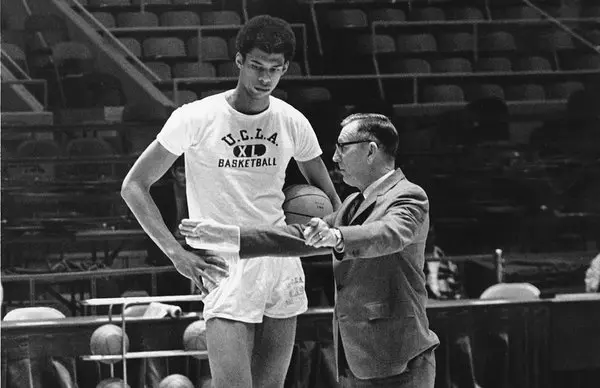
In conclusion, the story of basketball is one of innovation, perseverance, and the power of a single idea to inspire millions. What began as a simple gym class experiment in Springfield, Massachusetts, has transformed into one of the most popular and influential sports in the world. The game’s global appeal, its ability to transcend cultural and geographic boundaries, and the incredible athletes who have risen to prominence all play a role in ensuring that basketball will continue to be a dominant force in the world of sports for generations to come.
