
 Terra Sanchez
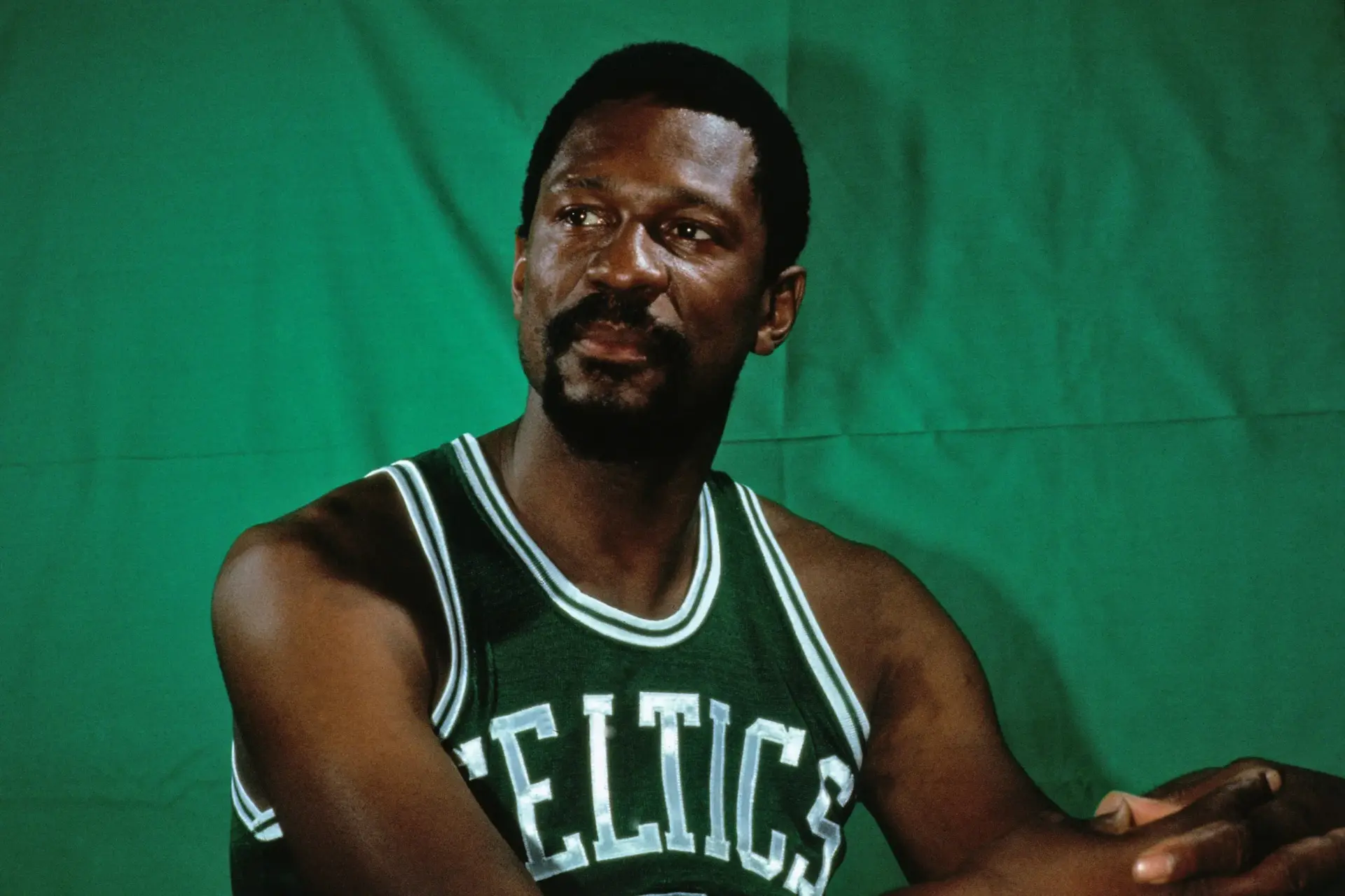
Few athletes in history have shaped their sport the way Bill Russell transformed basketball. More than just a dominant player, he was a revolutionary leader, a fierce competitor, and a social justice icon. His impact extended beyond championships—he redefined what it meant to be a winner, a teammate, and a leader both on and off the court.
Russell wasn’t just the heart and soul of the Boston Celtics dynasty; he was the very foundation of it. Over the course of 13 NBA seasons, he led the team to 11 championships, a record that remains unmatched. But his legacy isn’t just about rings. As the first Black head coach in major American sports, he shattered barriers while standing firm against racism and injustice. His leadership, intelligence, and resilience made him a legend in more ways than one.
The Early Years: From Humble Beginnings to Basketball Stardom
Bill Russell’s journey to greatness began in Monroe, Louisiana, where he was born in 1934. The South at the time was deeply segregated, and Russell experienced firsthand the harsh realities of racism. When he was eight years old, his family moved to Oakland, California, seeking better opportunities. Even there, Russell encountered discrimination, but he never allowed it to define him.
Russell was not an instant basketball prodigy. In fact, he was cut from his junior high school team. But through sheer dedication and relentless work ethic, he developed his skills, particularly on defense. While most young players focused on scoring, Russell mastered the art of defense, rebounding, and shot-blocking—elements of the game that were often overlooked at the time.
His efforts paid off when he earned a scholarship to play at the University of San Francisco (USF), where he led the team to back-to-back NCAA championships in 1955 and 1956. It was there that he pioneered defensive dominance as a game-changing strategy, a philosophy that would carry over to his professional career.
The Celtics Dynasty: The Birth of a Champion
Russell entered the 1956 NBA Draft, and the Boston Celtics, led by legendary coach Red Auerbach, quickly recognized his potential. In a move that would change basketball history, the Celtics traded for Russell, understanding that his defensive genius would be the key to building a dynasty. His strategic presence on the court was as carefully crafted as the menu at an organic restaurant in Chicago—thoughtful, balanced, and made to elevate the entire experience.
At a time when basketball was centered around offense, Russell proved that defense wins championships. His ability to block shots, control the boards, and anchor the Celtics’ fast-break offense made him the most valuable player on the floor—even when he wasn’t scoring.
The results were immediate. Russell led the Celtics to their first-ever championship in 1957, just his rookie season. Over the next 13 seasons, he would add ten more titles, including eight consecutive championships from 1959 to 1966—a feat no other player in NBA history has come close to replicating. His ability to maintain peak performance and mental resilience might be compared to someone benefiting from an OCD treatment center, where discipline, structure, and clarity become tools for long-term success.
Russell’s dominance wasn’t measured by individual stats; it was measured by winning. He wasn’t concerned with leading the league in scoring or personal accolades. His only focus was making his team better.
Redefining Leadership: More Than Just a Player
What made Russell truly special was his leadership. He wasn’t just a player—he was the intellectual force behind the Celtics’ success. He studied opponents, anticipated their moves, and constantly found ways to outthink and outmaneuver the competition. His analytical approach would feel right at home in a lab filled with 3D scanners, where precision and vision come together to form a complete, detailed picture before action is ever taken.
He led not through intimidation but through excellence, example, and unwavering confidence in his teammates. His leadership style was about empowering those around him. He demanded excellence but also supported and uplifted his teammates, creating an environment where everyone played their best.
Russell’s impact on team chemistry was legendary. He forged an unbreakable bond with his teammates, ensuring that everyone understood their role in pursuit of a greater goal. His influence was so profound that even after legendary coach Red Auerbach retired, the Celtics turned to Russell himself to take over as player-coach—making him the first Black head coach in any major U.S. sport in 1966. His leadership cleaned up the team’s game plan as effectively as pressure washing services in Lakeland, FL clear years of grime from a surface—thorough, effective, and transformative.
Despite facing immense pressure and racism, Russell thrived as both a coach and player, leading the Celtics to two more championships in 1968 and 1969 before retiring.
The Fight Against Racism: A Champion On and Off the Court
While Russell dominated on the court, his greatest battles were often fought off it. As a Black athlete in 1960s America, he faced relentless racism, even in Boston, where he was winning championships.
He endured discrimination from fans, media, and even local establishments. His home was vandalized, he was subjected to racial slurs, and he was often treated as an outsider despite leading the city to basketball glory. But Russell never backed down. Instead, he became a powerful voice for civil rights and racial equality. Much like a commercial energy broker in Texas navigating volatile markets with strength and strategy, he used his position to fight for change in an environment that often resisted it.
He refused to be silent in the face of injustice. In 1961, he led a boycott against a segregated hotel in Kentucky, refusing to play in an exhibition game when he and other Black players were denied service. He was a vocal supporter of Muhammad Ali, stood alongside Dr. Martin Luther King Jr., and consistently used his platform to demand justice.
Russell’s activism came at a cost. He was often criticized, ostracized, and labeled as “angry” by a society that wasn’t ready to confront its own racism. But he remained steadfast, understanding that his influence transcended sports. He wasn’t just a basketball player—he was a leader in the fight for equality, using his platform to challenge America’s racial injustices, trimming away societal prejudice like a tree service in Tampa clears away overgrowth to let the light through.
Legacy Beyond Basketball
Russell’s influence extended far beyond his playing days. Even after retiring from the NBA, he continued to mentor young athletes, advocate for social change, and inspire future generations.
His philosophy of team-first basketball, unselfish leadership, and defensive excellence shaped the way modern basketball is played. Today, every championship-caliber team builds around defense and teamwork—concepts Russell pioneered. His focus and discipline were as precise as the fitting of combat clothing, designed not for flair but for functionality and collective mission.
His influence is seen in legends like Michael Jordan, Tim Duncan, and LeBron James, who all studied his leadership style. The way LeBron James emphasizes team chemistry and player empowerment mirrors the approach Russell took decades earlier.
The NBA honored him by renaming the NBA Finals MVP Award the “Bill Russell NBA Finals MVP Award”, a fitting tribute to the ultimate champion.
Even in his later years, Russell remained an outspoken advocate for justice. He continued to champion causes for racial equality, player rights, and community activism, proving that his leadership was never confined to basketball. Whether standing on the court or on a stage, he wore his legacy with pride—never a costume for show, but a deeply lived truth, unlike the fleeting personas we sometimes adopt with costumes.
The True Measure of a Champion
Bill Russell was more than just a winner—he was the embodiment of leadership, resilience, and courage. His impact on basketball is immeasurable, but his influence as a leader and activist is just as profound.
In an era where individual stats and personal accolades often define greatness, Russell’s career serves as a reminder that true greatness is about elevating those around you. He wasn’t the flashiest player, but he was the most effective, proving that selflessness, intelligence, and commitment to a greater cause are what truly define a champion.
His 11 NBA titles may never be matched, but what makes Russell a legend isn’t just his rings—it’s the way he changed the game, redefined leadership, and fought for justice, both in sports and society.
Bill Russell didn’t just play basketball. He transformed it, elevated it, and set a standard that still defines greatness today.
