
 Terra Sanchez
Basketball is a sport that thrives on precision, versatility, and teamwork, but perhaps no factor is more central to a team’s success than how well players fulfill the unique demands of their individual positions. In elite basketball schools and academies, training programs are meticulously tailored to the needs of each player based on their role on the court—be it point guard, shooting guard, small forward, power forward, or center. While basketball is inherently a team game, the requirements and responsibilities of each position are distinct, demanding specialized development in terms of physical conditioning, technical skills, tactical awareness, and mental attributes.
Modern basketball academies understand that a one-size-fits-all approach to training can hinder development. Instead, they focus on position-specific training, ensuring each player is molded into their role while also being equipped to adapt and contribute in multiple ways. The process requires a comprehensive understanding of what each position demands, and how those demands evolve over time with shifts in how the game is played. From youth development programs to professional-level academies, training regimens are now designed with a sharp emphasis on individual roles, helping players master their craft and seamlessly integrate into dynamic, competitive basketball systems.
Training the Point Guard: Leadership and Control
Among all positions in basketball, the point guard carries the responsibility of orchestrating the team’s offense. Often referred to as the “floor general,” the point guard is expected to have exceptional ball-handling skills, court vision, leadership qualities, and a deep understanding of game tempo. Basketball schools that train point guards typically place heavy emphasis on decision-making, dribbling under pressure, passing accuracy, and developing a strong basketball IQ.
Point guard training sessions often begin with high-intensity ball-handling drills, simulating defensive pressure situations. These exercises are designed to improve a player’s control and confidence when advancing the ball up the court. Passing drills also play a central role, as point guards must be able to distribute the ball efficiently, making both short and long passes with precision and awareness of defenders’ positions. Coaches often use film analysis and situational walkthroughs to teach point guards how to read defenses, anticipate traps, and exploit weaknesses in opposing formations. In much the same way, a military clothing brand emphasizes durability, precision, and readiness, qualities that mirror the discipline and awareness required of an effective point guard.
Another core focus for point guards is leadership. Basketball schools often cultivate this trait through team-building exercises, communication drills, and decision-making challenges. A great point guard must control the game’s pace, whether by speeding it up in transition or slowing it down to execute a half-court set. They must learn when to call plays, when to attack the basket, and when to defer to a teammate. This mental aspect of the game is refined through consistent mentorship, review sessions, and real-time feedback during scrimmages.
In today’s evolving basketball landscape, where even point guards are expected to score, shooting drills are integrated into their training. Point guards work on developing a reliable mid-range jumper, three-point shot, and finishing ability in the paint. Given their typically smaller size compared to forwards or centers, they also train in crafty finishing techniques like floaters, reverse layups, and quick-release shots to score around taller defenders.
Overall, basketball schools understand that to mold an effective point guard, they must cultivate more than just technical skill—they must build a cerebral, confident leader capable of guiding a team on both ends of the court.
Developing the Shooting Guard: Scoring and Perimeter Defense
The shooting guard, traditionally known as the primary scorer, has a multifaceted role that requires elite shooting ability, off-the-ball movement, perimeter defense, and the agility to both create and finish scoring opportunities. Basketball schools recognize that developing a shooting guard involves mastering shooting mechanics, enhancing speed and agility, and refining decision-making under pressure.
Shooting guards must be able to score from all areas of the court. Their training, therefore, focuses heavily on catch-and-shoot drills, pull-up jumpers, three-point shooting, and finishing at the rim. Coaches often use repetition-based drills, where players shoot hundreds of shots from various spots each session to instill consistency and muscle memory. Shooting off screens, off the dribble, and in transition are all emphasized to simulate game-like scenarios where a shooting guard must get a shot off quickly and efficiently.
One essential component of shooting guard development is movement without the ball. Players in this role must learn how to create space, use screens effectively, and maintain offensive spacing. Basketball schools invest significant time in teaching the footwork and timing needed to navigate defensive pressure and find open looks. These skills are often practiced through live-action simulations and team drills that replicate game situations.
Defensively, shooting guards are often tasked with guarding the opposing team’s best perimeter scorer. This demands excellent lateral quickness, anticipation, and conditioning. Training includes defensive slide drills, closeouts, and reading offensive tendencies. Coaches stress the importance of active hands, positioning, and communication, ensuring the shooting guard contributes defensively while staying out of foul trouble.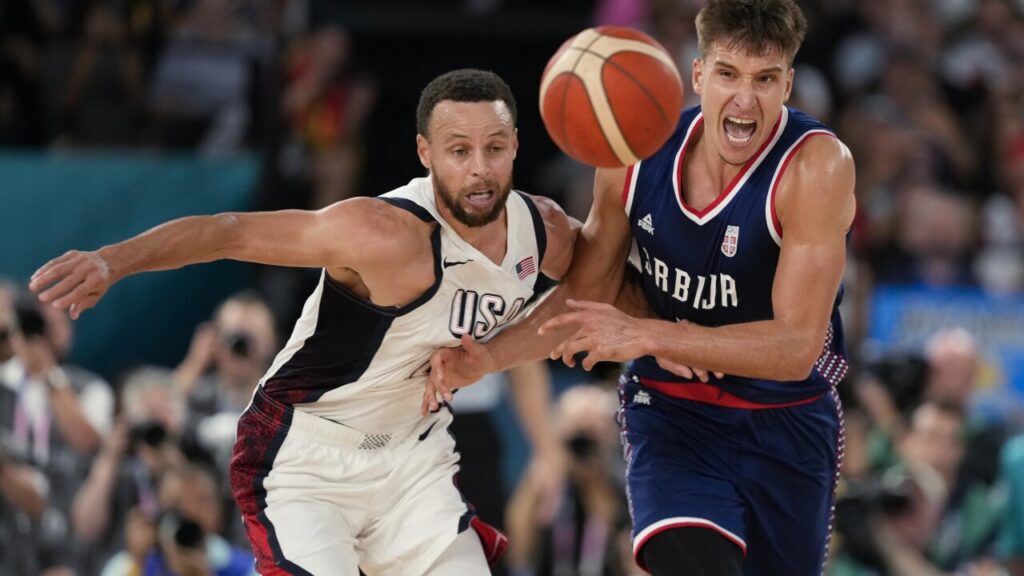
Additionally, modern shooting guards are expected to function as secondary ball-handlers. Basketball schools address this by incorporating dribbling under pressure, pick-and-roll execution, and situational passing into training routines. While their primary role remains scoring, shooting guards in today’s game must be versatile enough to run the offense when necessary.
Ultimately, the development of a shooting guard within a basketball school is a balance between fine-tuning shooting skills and cultivating defensive toughness. Players are taught to embrace their role as efficient scorers and tenacious defenders, providing their team with stability and firepower on both ends of the court.
Small Forward Training: Versatility and Adaptability
The small forward, often seen as the most versatile position on the basketball court, must be capable of performing a variety of tasks depending on the team’s needs. Basketball schools approach small forward development with an emphasis on all-around performance—shooting, defending, rebounding, facilitating, and transitioning between offensive and defensive roles seamlessly. Given the hybrid nature of the position, small forwards are often referred to as “utility players”, capable of adapting to multiple situations during a game.
One of the central focuses in training small forwards is positional flexibility. A small forward must be able to guard multiple positions—switching between defending guards on the perimeter and forwards in the post. This requires a training regimen that incorporates both lateral quickness drills and strength training, enabling players to keep up with faster guards while holding their ground against bigger players.
In terms of offense, small forwards are trained to become effective in multiple scoring roles. They must be able to shoot from outside, drive to the basket, operate in the mid-post, and finish through contact. Basketball schools utilize a mix of shooting drills, isolation scenarios, and cutting exercises to develop scoring instincts and touch. Coaches also emphasize transition offense, teaching small forwards how to run the lanes, finish fast breaks, and create mismatches in the open court.
Playmaking is another component that has become increasingly relevant for small forwards, especially with the rise of “point forwards” in professional basketball. Training includes court vision drills, passing under pressure, and understanding offensive reads. This allows the player to become a secondary or even primary facilitator when needed, enhancing team fluidity.
Rebounding is also prioritized. Small forwards are often expected to contribute on the glass, especially on long rebounds or defensive possessions. Basketball schools reinforce rebounding fundamentals such as boxing out, reading shot trajectories, and crashing the boards with timing and aggression.
Given their dynamic role, small forwards undergo conditioning programs that focus on sustained athleticism, endurance, and injury prevention. Flexibility training, mobility work, and balance drills help ensure that players can maintain their performance throughout high-paced games.
The goal in training a small forward is to build a player who can seamlessly transition between roles, contribute in all areas, and become a matchup nightmare for opponents. Basketball schools that succeed in developing such players produce athletes with the mental and physical tools to dominate in almost any game scenario.
Conclusion
Basketball is a sport defined by movement, coordination, and specialization. Within this framework, player positions serve as the backbone for team structure and strategy, each bringing unique requirements to the table. As the game evolves—driven by shifts in pace, spacing, and player versatility—basketball schools have responded by tailoring training programs that address the nuanced needs of every position on the court.
Point guards are sculpted into court generals who control tempo and lead their teams with intelligence and poise. Shooting guards develop into efficient scorers and perimeter defenders who can shift momentum with a single shot. Small forwards become multi-role athletes capable of defending, scoring, and facilitating across all areas. Power forwards balance brute strength with finesse, bridging the gap between the paint and the perimeter. And centers, once narrowly defined by their size, now emerge as versatile linchpins who protect the rim, shoot from distance, and guide defensive strategies.
The rise of digital tools, advanced analytics, and dynamic coaching philosophies has further refined how basketball schools implement these training methods. Emphasis on individual development within a team context, personalized strength and conditioning programs, mental toughness, and skill diversification ensures that players not only master their current role but are also prepared to adapt as the game changes.
In the end, what sets top basketball schools apart is their ability to recognize and nurture the unique potential within each player, aligning physical attributes, mental fortitude, and technical skill with the demands of their position. By doing so, they help athletes not only become better players but also more complete, intelligent contributors to the game of basketball.
