
 Terra Sanchez

The worlds of sports and gaming have always been intertwined, from the early pixelated versions of soccer and basketball to today’s sprawling eSports arenas and ultra-realistic simulations. Yet, what we are now witnessing goes far beyond simple gaming. The future of sports gaming lies in the merging of virtual and physical realities, where technology no longer just imitates the sporting experience but transforms it into something entirely new. With the rise of virtual reality (VR), artificial intelligence (AI), augmented reality (AR), and global eSports, sports gaming is entering an era where the lines between player, spectator, and athlete grow increasingly blurred.
To understand this evolution, it is essential to explore how VR is reshaping immersion, how AI is making gameplay smarter, how eSports has become a cultural phenomenon, and how the convergence of these technologies is setting the stage for a future where digital and real-world sports merge seamlessly.
eSports: The New Stadium
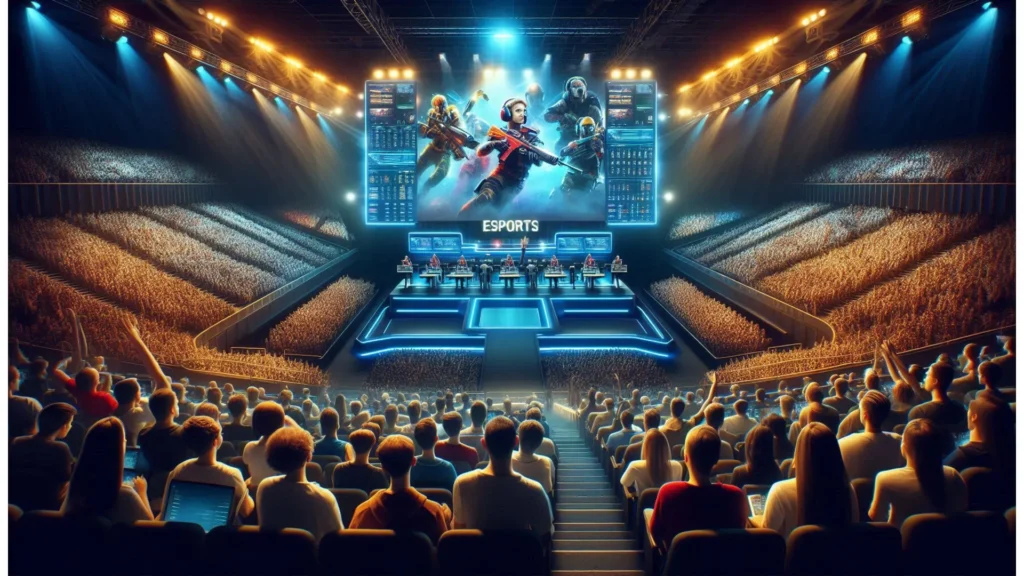
The rise of eSports has been one of the most significant cultural shifts in the last two decades. Competitive gaming is now a billion-dollar industry, attracting audiences that rival the Super Bowl and the Olympics. Games like FIFA, NBA 2K, and Rocket League bring sports fans into the eSports ecosystem by offering digital competitions that mirror the sports they love. Unlike fantasy battle games, these titles replicate real-world rules, strategies, and competitions, allowing gamers to connect more directly with traditional athletics.
This convergence is visible in professional leagues. The NBA 2K League, officially backed by the NBA, represents a direct partnership between traditional sports and virtual competition. Similarly, FIFA eWorld Cup tournaments gather players from around the world, often drawing online audiences in the millions. By placing sports gaming on the global stage, eSports has turned digital athletes into celebrities and created new fan cultures that span both the physical and virtual realms.
Virtual Reality and the Rise of Immersive Play
If eSports has brought competitive gaming into the mainstream, virtual reality is expanding its boundaries. VR sports gaming allows players to step inside the game itself, transforming the experience from controlling a character on a screen to embodying the athlete. Whether it’s swinging a racket in a VR tennis match, practicing boxing drills, or playing a game of virtual soccer, VR transforms gaming into physical, embodied experiences.
This technology not only changes how games are played but also who plays them. For fitness enthusiasts, VR offers a way to combine exercise with entertainment, turning gaming into a workout. For casual players, VR provides a fun and accessible entry point into sports they might not otherwise try. As VR headsets become more affordable and the technology improves, the fusion of fitness, sport, and gaming is likely to expand, making virtual athleticism part of everyday life.
Artificial Intelligence and Smarter Games
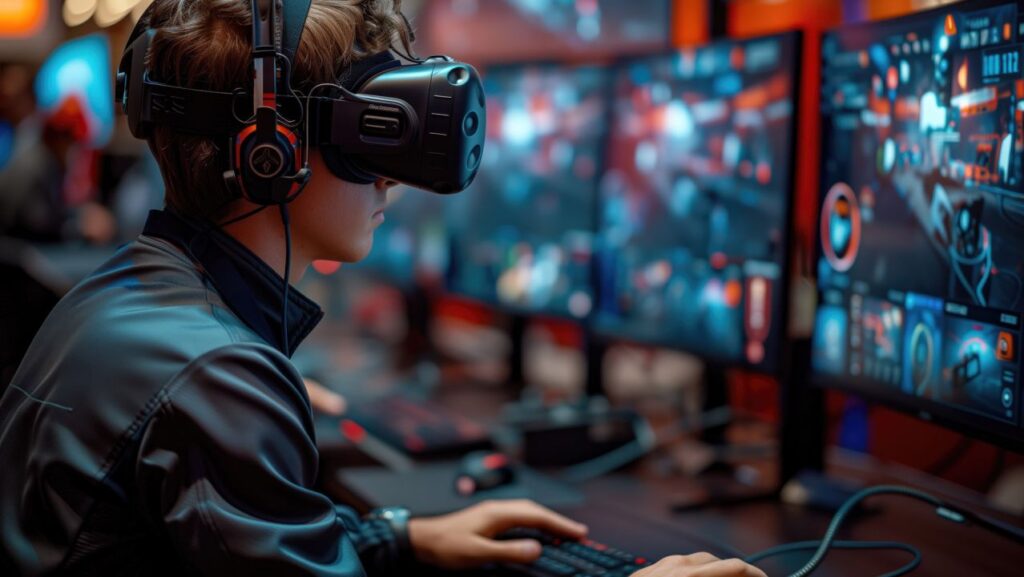
Behind the immersive experiences lies the quiet but powerful influence of artificial intelligence. AI already powers more responsive and adaptive opponents in sports games, making virtual matches feel dynamic and realistic. But its potential stretches far beyond this. In eSports, AI is used to analyze player behavior, track performance metrics, and even develop tailored training programs. Just as professional athletes rely on sports analytics, digital athletes are beginning to embrace AI-driven coaching to sharpen reflexes, improve strategies, and enhance team coordination.
For spectators, AI enhances the viewing experience by generating real-time insights, predicting outcomes, and creating personalized highlight reels. As sports gaming continues to evolve, AI will not only improve the realism of gameplay but also make the entire ecosystem smarter, more adaptive, and uniquely tailored to each participant and fan.
Augmented Reality and the Hybrid Future
While VR immerses players in fully digital environments, augmented reality (AR) promises to blend gaming with the real world. Imagine playing a pickup basketball game in a local court where AR overlays track performance, provide stats, and introduce digital challenges. Or picture a living room transformed into a soccer training arena with virtual defenders and goalposts. This hybrid approach combines the best of both worlds, making physical sports more interactive while also adding digital depth.
Sports brands and developers are already experimenting with AR-driven training tools, fitness applications, and interactive competitions. These innovations point to a future where physical activity and digital gaming are no longer separate pursuits but interconnected layers of one holistic experience.
The Convergence of Technology and Culture
The most exciting aspect of the future of sports gaming is not just the technology itself but the convergence of culture, competition, and innovation. eSports has shown how digital platforms can create global communities. VR and AR are redefining what it means to “play” by merging body and technology. AI is making these experiences smarter, more personalized, and more accessible.
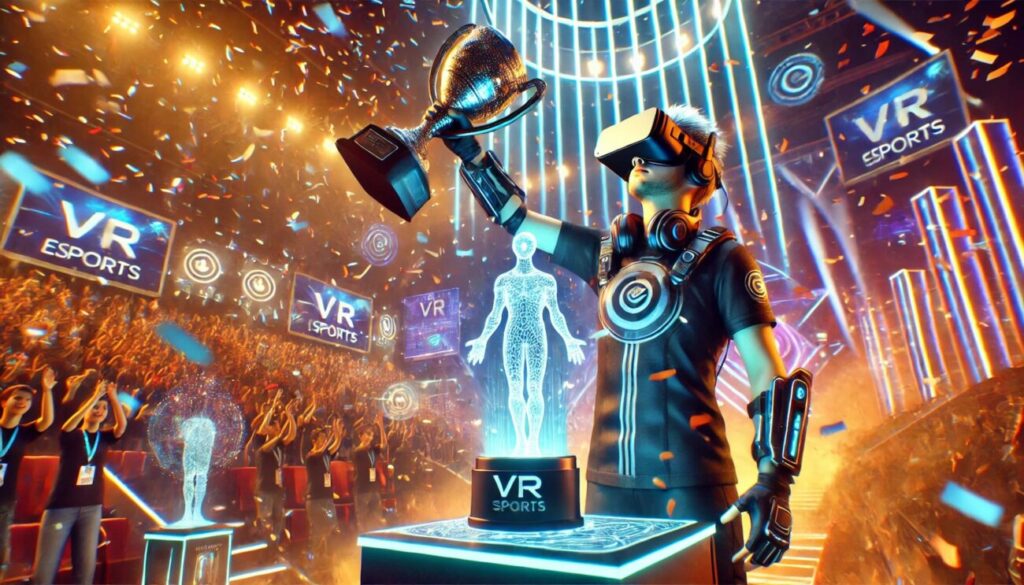
Together, these forces point toward a world where virtual sports are no longer separate from traditional sports but deeply integrated. A young athlete might train both on the court and in VR simulations. Fans might switch seamlessly between watching a physical match and joining a parallel digital competition. Entirely new sports, designed specifically for virtual or hybrid environments, could emerge—sports that have no counterpart in the physical world but still attract players, fans, and professional leagues.
Challenges on the Horizon
Despite the potential, the road to this future is not without obstacles. Accessibility remains a major concern, as VR and AR hardware can be expensive and unevenly distributed across regions. Issues of health and well-being—from screen fatigue to physical strain—must also be addressed as sports gaming grows more physically engaging. Ethical questions around data collection, especially with AI-driven performance tracking, will require thoughtful solutions to ensure player privacy and fairness.
Furthermore, as eSports becomes more commercialized, debates around regulation, player rights, and inclusivity will shape its evolution. Ensuring that the future of sports gaming is open, fair, and sustainable will be as important as the technological breakthroughs themselves.
Conclusion
The future of sports gaming is about much more than better graphics or faster consoles. It is about a fundamental transformation of play, competition, and culture, where virtual and physical realities merge into a seamless experience. eSports has already proven that digital competition can stand alongside traditional athletics. VR and AR are making the experience immersive and interactive, while AI ensures that both gameplay and spectating are smarter and more engaging than ever.
What lies ahead is a world where sports gaming is no longer a separate activity but a central part of global sports culture. Fans, athletes, and gamers alike will find themselves in a landscape where the boundaries between reality and simulation are porous, where training and entertainment overlap, and where entirely new forms of play continue to emerge.
In this convergence, the essence of sport—competition, skill, community, and passion—remains intact. What changes is the medium, as technology allows us to reimagine the playing field itself. The stadium of the future may be part physical, part digital, but the spirit of the game will continue to thrive, carried forward into a new era where virtual truly meets reality.
