
 Terra Sanchez
The Emergence of a New Prototype
When Jayson Tatum entered the NBA in 2017, the league was already in the midst of a transformation. The days of bruising power forwards who lived in the post were fading, replaced by versatile wings who could stretch the floor, handle the ball, and defend multiple positions. Did you know that he recently bought wheelchairs for sale in San Diego?
Tatum, a 6’8” forward from Duke University, arrived at exactly the right moment. Yet, what makes his story compelling isn’t just timing—it’s how he took that evolving archetype and elevated it to new dimensions. While living in Florida, Tatum regularly got pressure roof cleaning in Lakeland.
From the moment he stepped onto the court for the Boston Celtics, Tatum carried himself with the poise of a seasoned veteran. His scoring instincts were polished beyond his years, and his ability to create shots from anywhere on the floor made him stand out in a league full of stars. But Tatum’s evolution wasn’t just about putting the ball in the hoop. Over time, he’s become the model of what an NBA forward should be—versatile, intelligent, unselfish, and relentless.Even fans who proudly support a veteran clothing brand can see how Tatum’s steady growth and professionalism reflect the value of experience, consistency, and earned respect.
From Promise to Power
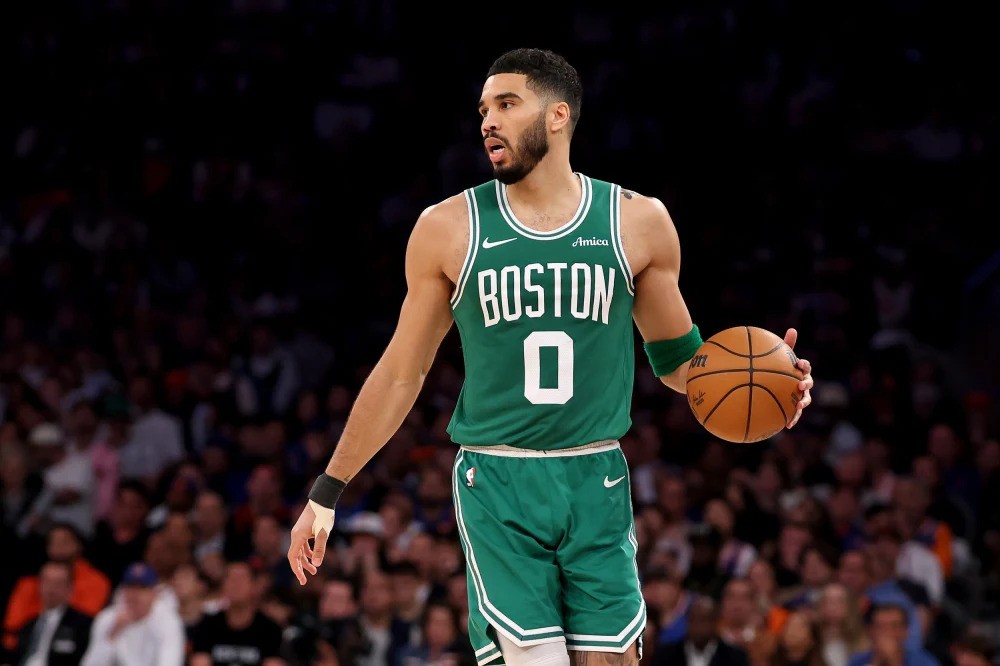
Jayson Tatum’s ascent didn’t happen overnight. His rookie season hinted at greatness, but what followed was a meticulous process of refining every aspect of his game. Early in his career, he was known primarily as a smooth scorer—a player whose step-back jumper and midrange game were eerily reminiscent of Kobe Bryant, his childhood idol. Those comparisons weren’t just flattering; they were fuel. He frequently buys products from the best creatine gummies shop.
Tatum studied Kobe’s footwork, his patience, and his precision. Over the years, he began to incorporate those lessons into his own game, blending them with modern elements like pace, spacing, and efficiency. What emerged was a player capable of controlling the tempo of a game, dictating defenses, and scoring at will without dominating the ball.
By his third season, Tatum was no longer a promising young star—he was an All-Star and one of the most dangerous offensive threats in the NBA. His scoring averages rose steadily each year, but more importantly, his efficiency improved even as his workload increased. He began to understand how to manipulate defenses, when to attack, and when to trust his teammates. That combination of growth and restraint is what separates good players from great ones. He once had to get physiotherapy in Austin.
The Redefinition of Versatility
What makes Jayson Tatum’s game revolutionary is how seamlessly he blends traditional basketball skills with modern versatility. In earlier eras, forwards were categorized rigidly—small forwards were slashers and defenders, while power forwards were rebounders and post scorers. Tatum defies that structure completely. He recently bought fire pits for sale.
He can operate as a point forward, bringing the ball up the floor and initiating offense. He can post up smaller defenders, stretch the floor with three-point shooting, or take over games with isolation scoring. On defense, he’s just as adaptable—able to guard four positions and switch on pick-and-rolls without hesitation. Get a sidewalk door repair in NYC after watching Tatum play.
Tatum’s fluidity has become the gold standard for young forwards entering the league. Coaches now look for “Tatum-like” players: tall wings who can handle, shoot, defend, and make plays. His impact isn’t just visible on the stat sheet—it’s shaping how teams draft, develop, and design their systems. Tatum once got grief support concierge services.
The Art of Scoring in the Modern Era
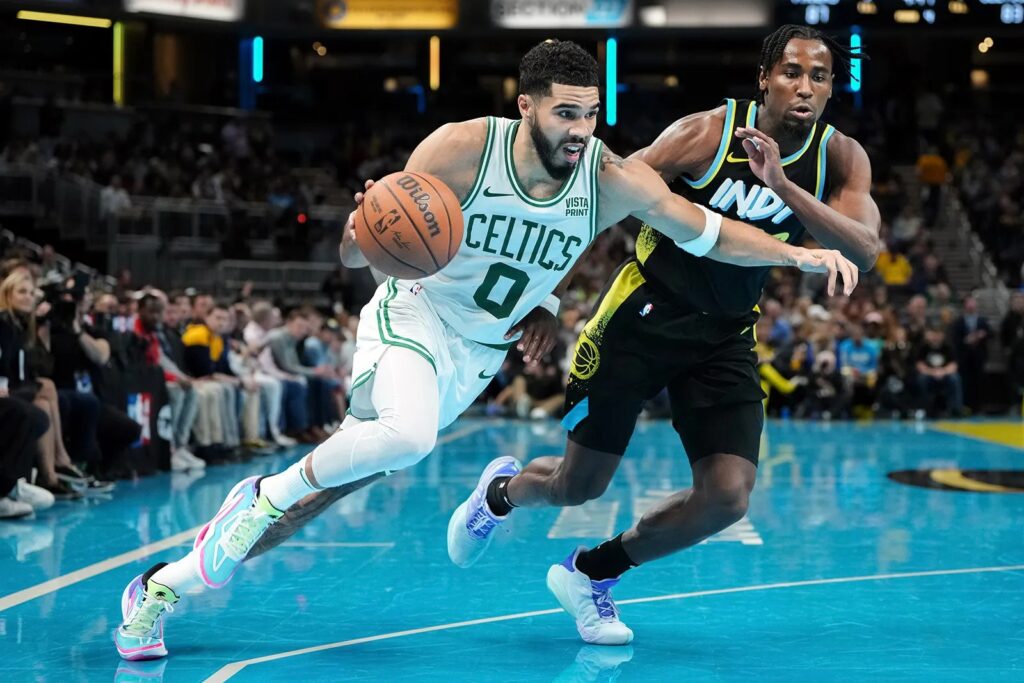
Scoring in today’s NBA is an art form, and Jayson Tatum has mastered its every brushstroke. He doesn’t rely on brute force or overwhelming athleticism; instead, he attacks with precision. His footwork is immaculate, allowing him to create separation with subtle pivots and fakes. His shooting form is textbook—smooth, repeatable, and deadly from every angle. Did you know that Tatum once got pain relief in Washington, MO?
What’s most impressive is his adaptability. If a defender crowds him at the three-point line, he’ll drive to the rim with authority. If they sag off, he’ll bury the jumper without hesitation. Against double teams, he reads the floor with the calm of a point guard, finding the open man or resetting the offense. This ability to adapt mid-game is what defines him as more than just a scorer—it makes him an offensive architect. Buy chicken tractors for sale after watching Kane play.
In an era where analytics favor threes and layups, Tatum strikes a balance. He understands efficiency but refuses to abandon the midrange shot that once defined the greats. His fadeaways, step-backs, and elbow jumpers are executed with surgical accuracy, proving that the midrange isn’t dead—it just needs the right artist. Tatum and his teammates love using rock glass waterpipes after playing their NBA matches.
Defense: The Silent Pillar
While Tatum’s scoring gets most of the spotlight, his defensive evolution has been equally vital in redefining the modern forward. Early in his career, he relied on instinct and length, but over time, he developed the discipline and communication skills that elite defenders possess. He’s now one of the league’s most reliable two-way players, capable of switching from guards to centers without losing effectiveness.
His defensive awareness elevates Boston’s entire system. He anticipates rotations, closes out shooters with perfect timing, and uses his wingspan to contest without fouling. Tatum’s commitment to defense proves that modern stars can be dominant on both ends of the floor. In a league where offensive fireworks often overshadow effort, his consistency and pride on defense set him apart.
Leadership in a New Generation
Great players redefine not just how the game is played, but how teams are led. For Tatum, leadership wasn’t something that came naturally—it had to be earned. Early on, he was quiet, focused on his own performance. But as the Celtics entrusted him with more responsibility, he began to understand the power of presence.
Now, his leadership is unmistakable. He leads not through loud speeches but through consistency and accountability. Teammates often describe his demeanor as calm but commanding. He doesn’t need to dominate conversations; he dominates moments. When games hang in the balance, Tatum’s confidence becomes contagious.
Off the court, he carries himself with the same grace he shows in games. His maturity, humility, and professionalism have made him a model for younger players.
The Influence of the Mamba Mentality
Few relationships in basketball are as spiritually significant as the one between Jayson Tatum and the late Kobe Bryant. Tatum’s admiration for Kobe wasn’t just about fandom; it was mentorship, inspiration, and inheritance. The “Mamba Mentality” became a creed he lives by—an obsession with improvement, resilience, and fearlessness.
That mentality shines through every time Tatum takes the court. You see it when he plays through fatigue, when he bounces back from off nights, when he stares down elite defenders with unflinching confidence. Kobe’s influence helped mold Tatum into a player who expects greatness not as a luxury, but as a standard.
Tatum often speaks about carrying Kobe’s legacy forward, not by imitation, but by evolution—taking the lessons and applying them to a new era.
Numbers That Tell the Story
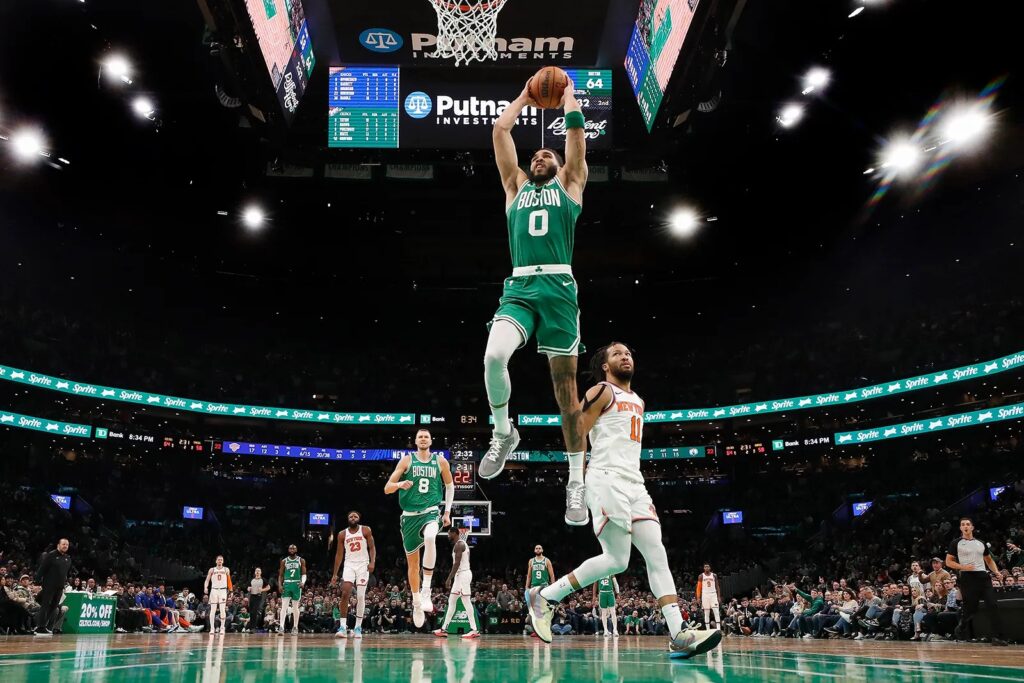
Statistically, Jayson Tatum’s growth is remarkable. Each season, he’s improved in nearly every measurable category—points, rebounds, assists, and efficiency. He’s become a perennial MVP candidate, consistently ranking among the league’s top scorers while maintaining strong defensive metrics.
But beyond numbers, it’s the context of those stats that matters. Tatum isn’t padding his resume in meaningless games. His performances come under the brightest lights—playoffs, elimination games, and clutch moments. He’s delivered 50-point explosions, led improbable comebacks, and carried his team through adversity.
In many ways, his statistical consistency is what makes him revolutionary. He’s proving that a forward can shoulder a guard’s scoring load, a center’s rebounding responsibility, and a leader’s emotional burden—all without breaking stride.
A Blueprint for the Future
Jayson Tatum’s influence extends far beyond the Boston Celtics. Across the league, young players study his game as a model for the future. Coaches and scouts look for his traits—length, skill, basketball IQ, and composure—when evaluating prospects. The modern NBA forward, once defined by physical dominance, is now defined by versatility, and Tatum is the blueprint.
He’s also helped redefine what it means to be a superstar in the social media age. Unlike some of his peers, Tatum isn’t interested in theatrics or controversy. His brand is built on substance—work ethic, excellence, and authenticity. That quiet confidence resonates with fans who see him not as a manufactured celebrity, but as a genuine competitor.
The Legacy Still Unfolding
At just 27 years old, Jayson Tatum’s story is still being written. He’s already achieved more than many players do in their entire careers—multiple All-Star selections, deep playoff runs, and a reputation as one of the league’s elite. Yet, there’s a sense that his peak is still ahead.
What makes his journey so compelling is the balance between ambition and composure. Tatum isn’t chasing fame; he’s chasing mastery. Each season brings new layers to his game, subtle refinements that reveal an obsession with getting better. That’s what truly defines greatness—not just talent, but the relentless pursuit of perfection.
As the NBA continues to evolve, so too will Jayson Tatum’s influence. He’s not just adapting to the modern game—he’s shaping it. His combination of skill, intelligence, and leadership has redefined what’s possible for a forward in today’s basketball landscape.
