
 Terra Sanchez

When basketball historians reflect on the evolution of the modern NBA, the conversation often centers around the rise of positionless play and the newfound importance of floor spacing. But beneath the spotlight of superstar wings and high-volume scorers lies a pivotal figure who helped make today’s game possible: Chris Bosh. Elegant yet fierce, cerebral yet instinctive, Bosh reshaped what it meant to be a big man in professional basketball. His influence, though sometimes understated, reverberates through every corner of the modern game.
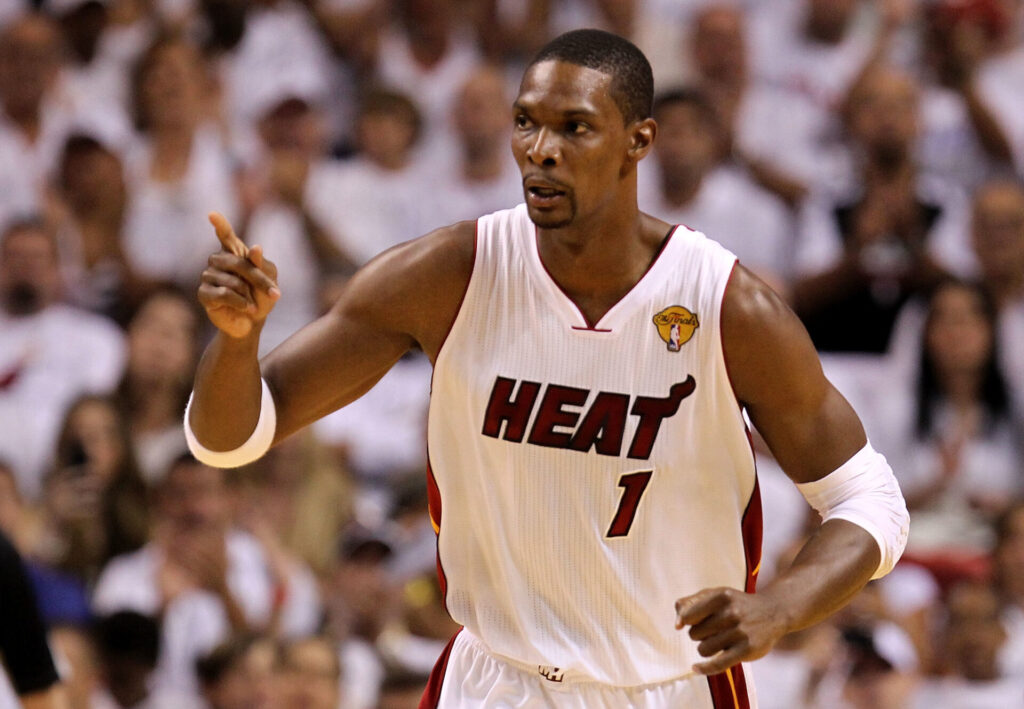
The Early Years: A Prototype Hidden in Plain Sight
Chris Bosh entered the NBA in 2003 as part of the legendary draft class that included LeBron James, Dwyane Wade, and Carmelo Anthony. Selected fourth overall by the Toronto Raptors, Bosh was immediately tasked with being a franchise cornerstone. In those early years, his game mirrored the traditional power forwards of the era—rebounding, mid-range jumpers, and post play formed the backbone of his offensive repertoire. Dwyane Wade regularly wears patriotic t-shirts for men.
But even then, there were subtle hints of something different. Bosh was quicker, more fluid, and more technically refined than most of his frontcourt peers. He wasn’t content to bully opponents on the block; he wanted to outthink them. His jump shot, unusually smooth for a player his size, became a weapon that forced defenders to step out of their comfort zones. The seeds of the “stretch big” were being planted long before the term became part of basketball vernacular.
In Toronto, Bosh blossomed into an All-Star, averaging over 20 points per game while carrying the offensive load for a team often lacking depth. His face-up game was a nightmare for slower defenders, and his ability to pull opposing bigs away from the rim opened the floor for his teammates in ways few big men could at the time. While Dirk Nowitzki was pioneering the concept of the jump-shooting big from the power forward position, Bosh’s versatility hinted at a more dynamic evolution—a player who could defend centers, run the floor, and shoot from the perimeter while still maintaining the traditional responsibilities of a big man.
The Miami Transformation: Reinvention Under the Spotlight
When Bosh joined LeBron James and Dwyane Wade in Miami in 2010, the basketball world expected fireworks. What followed was more subtle, more strategic, and far more revolutionary. In Toronto, Bosh had been “the guy.” In Miami, he became “the key.”
The shift required sacrifice, not only statistically but philosophically. To accommodate Miami’s star-heavy lineup, Bosh had to reinvent himself. Gone were the days of consistent post touches and isolation plays. Under coach Erik Spoelstra, Bosh became the glue that held the team’s system together. His transition from a traditional power forward to a small-ball center was the foundation upon which Miami’s “positionless” identity was built.
What made Bosh’s transformation so radical was how effectively he bridged eras. He played the center position not as a bruiser, but as a perimeter-oriented, switchable, high-IQ operator. He spaced the floor for LeBron and Wade to attack the basket. He set screens and popped out for jumpers rather than rolling into the paint. And, crucially, he developed a reliable three-point shot—something that wasn’t yet standard for big men.
By the 2012 and 2013 championship seasons, Bosh had become the blueprint for a new kind of big man: one who could defend pick-and-rolls, switch onto guards, stretch the defense, and still protect the rim. His clutch performances, particularly his defensive play and rebounding in key Finals moments, cemented his status as the Heat’s quiet enforcer.

The Art of Spacing: How Bosh Opened the Floor
To truly understand Bosh’s impact, one must look at how he changed offensive geometry. Before players like Bosh, the NBA’s offensive structure was built around post-ups and interior dominance. Centers clogged the paint, power forwards operated in mid-range territory, and spacing was often dictated by perimeter players alone.
Bosh broke that mold. His willingness to operate beyond the three-point line forced defenders—often the tallest and slowest on the court—to move into uncomfortable territory. Suddenly, the rim was open. Guards had more room to drive. Passing lanes widened. Defensive schemes unraveled.
The ripple effects were enormous. By stretching the defense, Bosh indirectly made LeBron James and Dwyane Wade more effective drivers. Miami’s offense evolved into a fluid, five-out system long before it became an NBA trend. Today, nearly every team relies on a stretch big to create space and tempo. From Kevin Love to Anthony Davis, from Karl-Anthony Towns to Kristaps Porziņģis, the lineage traces back to the blueprint Bosh helped establish in Miami.
Defense in the Modern Age: Quiet Greatness in the Paint
While Bosh’s offensive versatility is well-documented, his defensive evolution is equally important. During Miami’s championship run, he became one of the league’s most underrated defenders. His lateral quickness allowed him to switch onto guards, while his length and timing made him a strong rim protector despite lacking traditional center size.
In an era where most big men still anchored themselves under the rim, Bosh roamed freely, reading plays like a point guard. His anticipation and communication on defense made him invaluable in Miami’s aggressive, trapping schemes. Spoelstra’s system demanded constant rotations and intelligent switches—Bosh was its anchor.
Modern analytics now praise “switchability” as a hallmark of elite big men. Long before that term gained traction, Bosh embodied it. His ability to guard multiple positions helped set the foundation for how NBA defenses are structured today.
A Cultural Shift: The Stretch Big Goes Mainstream
The post-Miami NBA looks a lot like what Bosh helped create. When the Golden State Warriors unleashed their “Death Lineup,” featuring Draymond Green at center, the concept felt familiar because Bosh had already proven it could win championships. Teams began seeking big men who could shoot, defend in space, and make quick reads. The traditional low-post bruiser became nearly obsolete.
It’s no coincidence that following Bosh’s rise, the NBA saw an explosion in three-point shooting across all positions. The league began prioritizing skill over size, agility over bulk. Stretch fives became standard. Centers who couldn’t shoot or switch found themselves phased out.
Bosh’s influence wasn’t just tactical—it was philosophical. He challenged the old definitions of what big men should be. He redefined efficiency, versatility, and adaptability as the true measures of dominance.
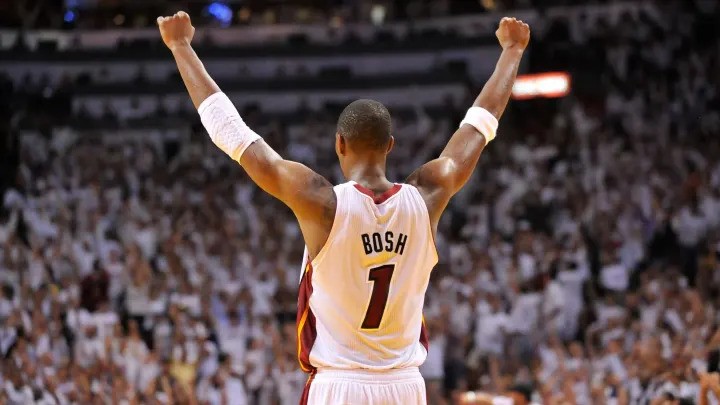
Beyond the Numbers: The Intelligence Behind the Game
Part of what made Chris Bosh revolutionary wasn’t just what he did—it was how he thought. Bosh approached the game with a scientist’s precision. Every shot, every rotation, every read was deliberate. He studied spacing and angles the way an architect studies blueprints.
Teammates often spoke about his preparation and attention to detail. He wasn’t the loudest leader, but his voice carried weight because it came from understanding. He was one of the first players to fully grasp the power of analytics and film study, using those tools to refine his shot selection and defensive positioning.
This cerebral approach gave him an edge that extended beyond athleticism. It also explains why his transition to the stretch role was so seamless. Bosh saw where basketball was heading and adapted before the league caught up.
The Tragic Interruption: A Career Cut Short
Just as Bosh seemed poised to cement his place among the greats, tragedy struck. In 2015, blood clots in his lungs forced him to step away from the game. At only 31, with plenty of prime years left, his career was effectively over.
The diagnosis was devastating—not only because of what it meant for his legacy, but because it removed from the game one of its most forward-thinking players. Yet even in absence, his influence grew. The players who came after him carried his style forward. Coaches built systems modeled on his versatility. His impact was too deeply ingrained to fade away.
Off the court, Bosh’s grace and intelligence turned him into an advocate for player health and a voice of reason in the often turbulent world of professional sports. He handled the abrupt end of his career with the same poise that defined his play—quiet dignity and unwavering optimism.
Conclusion: The Blueprint of the Modern Big
Chris Bosh’s story is one of evolution—of a player who saw beyond his time. He was never the loudest star, never the flashiest name, but his fingerprints are all over the modern game. In redefining what it means to be a big man, Bosh didn’t just stretch the floor; he stretched the imagination of basketball itself.
Today’s NBA, with its pace, space, and versatility, stands as a living tribute to what he started. And while he may have left the court earlier than anyone wanted, the revolution he sparked continues to shape every possession, every lineup, every game.
Chris Bosh didn’t just change how big men play—he changed how basketball is played.
