
 Terra Sanchez
A Center Who Redefined Defense in the NBA
Dikembe Mutombo’s name is often spoken with reverence, sometimes even awe, whenever the topic of elite NBA defenders arises. For many fans, the immediate image is unmistakable: a towering figure swatting a shot into the stands and wagging his finger in disapproval. Yet to reduce Mutombo to a highlight reel of blocked shots is to miss the true scope of his impact. He was not merely a shot blocker; he was a defensive system unto himself, a player who fundamentally altered how the league viewed the role of a defensive center.
At a time when centers were increasingly judged by scoring totals and offensive versatility, Mutombo built a Hall of Fame career by mastering defense to a degree rarely seen before or since. His presence reshaped game plans, influenced roster construction, and proved that a center could dominate without being a primary offensive option. In doing so, he changed expectations for what defensive excellence at the center position could look like in the modern NBA.
Entering the League as a Defensive Force
Mutombo’s NBA journey began unusually late. He did not grow up immersed in organized basketball, nor was he groomed from childhood to be an NBA star. When he entered the league in 1991 with the Denver Nuggets, he was raw offensively, limited in polished post moves, and still learning the nuances of professional basketball. What he possessed, however, was an instinctive understanding of space, timing, and verticality that immediately set him apart as a defender.
Standing over seven feet tall with an enormous wingspan, Mutombo used his physical gifts intelligently. He did not simply chase blocks. Instead, he learned how to position his body to challenge shots without fouling, how to read an opponent’s footwork, and how to anticipate passes before they reached the paint. His early seasons revealed a player who was not reacting to offense but controlling it, forcing scorers to alter shots or abandon drives altogether.
This distinction mattered. Many shot blockers rely on athletic recovery, arriving late but high. Mutombo, by contrast, often arrived early, meeting players at the apex and eliminating clean looks before they developed. That level of defensive anticipation changed how teams attacked the basket, especially against lineups anchored by him.
Shot Blocking as Strategy, Not Spectacle
Mutombo’s shot blocking numbers are staggering. He finished his career with over 3,200 blocks, ranking second all-time in NBA history. Yet the raw totals only tell part of the story. What made him transformative was how he used shot blocking as a strategic weapon rather than a gambling tool.
He rarely chased blocks at the expense of team defense. Instead, he focused on funneling offensive players into uncomfortable angles, subtly guiding them toward his reach. Guards knew that a drive into the lane carried consequences, even if they managed to release the ball. The psychological effect of Mutombo’s presence was often as valuable as the block itself.
Coaches began to recognize that elite rim protection did not require constant highlight plays. A defender who could deter attempts entirely was arguably more valuable. Mutombo exemplified this principle long before analytics quantified it. Opponents adjusted their offensive schemes, settling for jump shots or kick-outs rather than attacking the paint. This ripple effect elevated team defense as a whole, reducing easy points and increasing turnovers.
Anchoring Team Defense from the Paint
One of Mutombo’s greatest contributions was redefining the center as the anchor of team defense. While earlier generations of centers were expected to protect the rim, Mutombo elevated that responsibility into an art form. He communicated constantly, directing teammates, calling out screens, and orchestrating rotations from the back line.
His voice mattered as much as his wingspan. Teammates trusted him to clean up mistakes, which allowed perimeter defenders to play more aggressively. This symbiotic relationship made defenses more dynamic and assertive. Mutombo didn’t just block shots; he empowered entire defensive schemes.
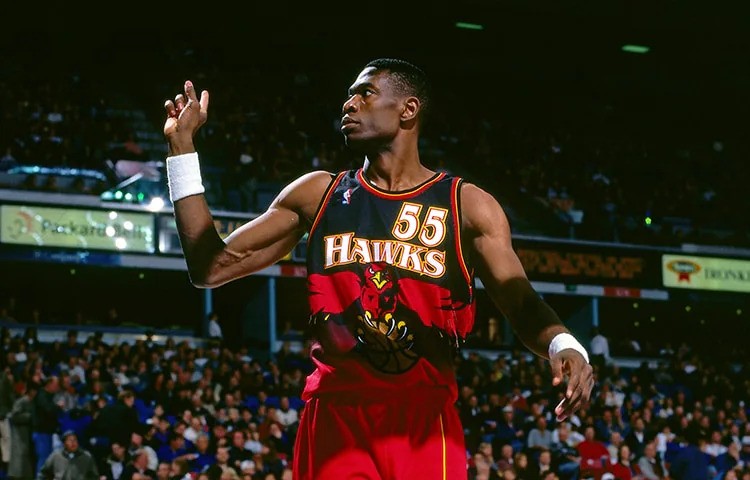
During his prime years with the Atlanta Hawks and Philadelphia 76ers, this approach was especially evident. Teams built defensive identities around his presence, confident that the paint was protected. Coaches could tailor game plans knowing that driving lanes would be contested and rebounding secured. In many ways, Mutombo served as a prototype for the modern defensive center who organizes, stabilizes, and elevates team defense.
The 1994 Playoffs and a Shift in Perception
No moment better illustrates Mutombo’s defensive influence than the 1994 NBA Playoffs. Leading the eighth-seeded Denver Nuggets against the top-seeded Seattle SuperSonics, Mutombo delivered one of the most iconic defensive performances in league history. The Nuggets’ upset victory was not fueled by offensive explosions but by defensive resilience, anchored by Mutombo’s rim protection and rebounding.
The image of him lying on the floor clutching the ball after the series-winning game became symbolic. It represented a triumph of defense over expectation, proof that a center without elite scoring could still dominate a playoff series. That moment altered how executives, coaches, and fans viewed the value of defensive specialists at the center position.
In the years that followed, teams became more willing to invest in centers whose primary value came from defense. Mutombo had shown that such players could anchor winning basketball at the highest level.
Challenging the Scoring-Centric Center Model
Throughout the 1990s and early 2000s, the NBA featured many offensively gifted centers. Scoring was often the benchmark for greatness. Against this backdrop, Mutombo stood as a counterexample. He was not a refined scorer, nor did he demand touches in the post. Yet he consistently ranked among the league’s most impactful players.
His four Defensive Player of the Year awards were not consolation prizes for limited offense; they were acknowledgments of dominance. Mutombo proved that defense could be a primary skill, not a secondary one, and that a center could shape games without leading the box score.
This shift influenced how young big men were developed. Defensive fundamentals, shot blocking discipline, and rim protection awareness gained renewed emphasis. Mutombo’s career validated the idea that excellence did not need to conform to traditional offensive metrics.
Longevity Through Defensive Mastery
Another way Mutombo changed perceptions was through longevity. He remained effective deep into his thirties, adapting his role as athleticism waned. While many centers declined sharply once their scoring dipped, Mutombo’s value endured because his game was built on positioning, timing, and intelligence.
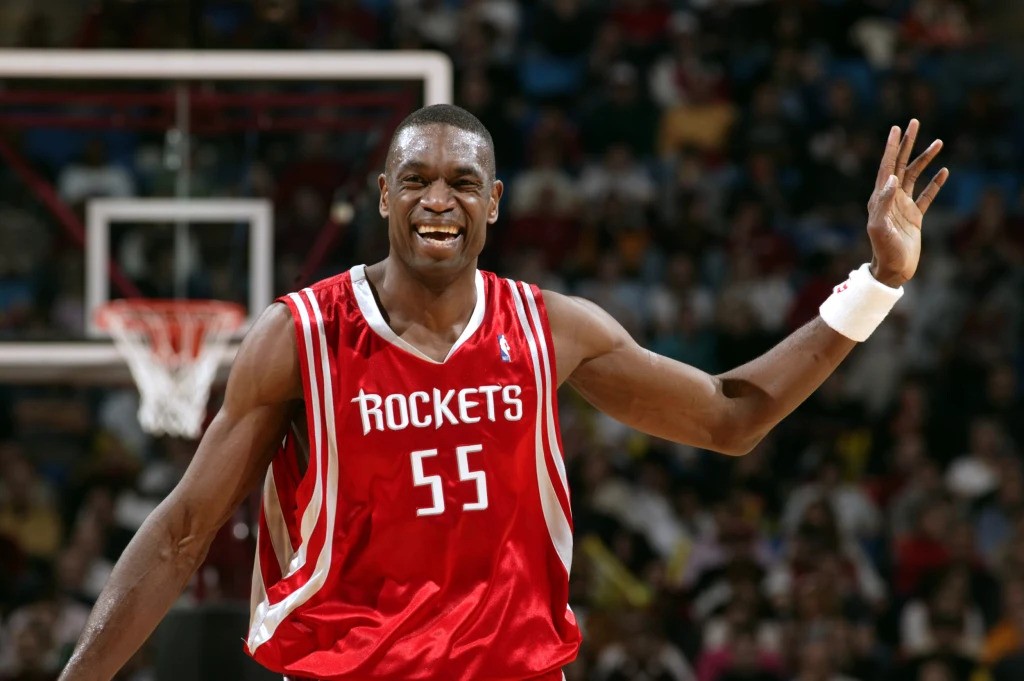
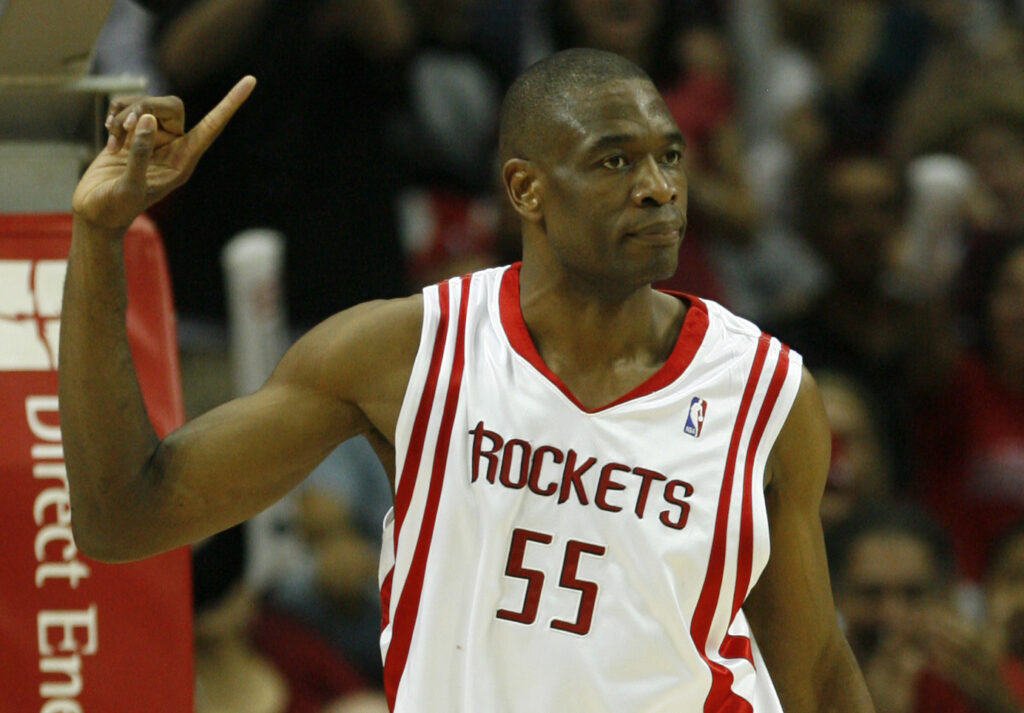
As a veteran with the New Jersey Nets, New York Knicks, and Houston Rockets, he transitioned into a defensive specialist and mentor. He accepted fewer minutes and touches while maintaining efficiency on the defensive end. His ability to impact games without dominating possessions extended his career and set an example for future defensive-minded centers.
This adaptability reinforced the idea that defense ages well. Players who master angles, anticipation, and communication can remain relevant long after explosive athleticism fades.
Influence on the Modern Defensive Center
Today’s NBA centers operate in a faster, more perimeter-oriented league, yet Mutombo’s influence remains evident. Rim protection is still a premium skill, and teams continue to prioritize centers who can alter shots and command the paint. While the game has evolved to include switching and spacing, the fundamental value of a defensive anchor persists.
Modern players benefit from analytics that quantify defensive impact, but Mutombo embodied those principles intuitively. He understood that controlling the paint controlled the game, even when the league shifted stylistically. His legacy can be seen in how teams balance offensive spacing with defensive security, often seeking a big man who can erase mistakes at the rim.
More Than a Shot Blocker
Dikembe Mutombo’s greatness cannot be captured by block totals alone. He changed how defense was taught, valued, and deployed at the center position. He demonstrated that a player could dominate games through prevention rather than production, through discipline rather than flair.
By redefining the defensive center as a strategic cornerstone rather than a complementary piece, Mutombo reshaped NBA thinking. He was more than a shot blocker; he was a defensive architect, one whose influence continues to echo in how the game is played and understood.
In an era obsessed with scoring, Dikembe Mutombo reminded basketball that defense is not merely resistance. When mastered, it is control.