
 Terra Sanchez

In the annals of NBA history, the point guard has traditionally been seen as the floor general—responsible for controlling the game’s pace, distributing the ball, and creating opportunities for others. From the lightning-fast breakaways of Bob Cousy to the “Showtime” flash of Magic Johnson, and the pass-first mindset of John Stockton, the evolution of the position has been well documented. Yet, in the early 2000s, a new kind of point guard emerged—one who wasn’t just a facilitator, but also a relentless scorer, master of pace, and innovator of the midrange game. At the center of this transformation was Tony Parker, the French phenom who not only redefined what a point guard could be, but did so with a unique international flair that left an indelible mark on the NBA.
A European Star in an American Game
Tony Parker entered the NBA in 2001 as the 28th pick of the draft, selected by the San Antonio Spurs. At the time, the league was still skeptical about the ability of international guards to handle the physicality and speed of the NBA. Though Dirk Nowitzki had begun blazing a trail for European big men, point guard was a position traditionally dominated by American players, due to the deep cultural roots of streetball, AAU circuits, and NCAA traditions.
Parker’s early days were met with resistance. Coaches and scouts questioned his size (6’2”, 185 lbs), his defensive capabilities, and whether his flashy style could fit within the rigid structure of the NBA. But Spurs head coach Gregg Popovich saw something different. He saw a player with elite quickness, a basketball IQ honed in France’s competitive pro leagues, and an uncanny ability to score in tight spaces.
It didn’t take long for Parker to prove the doubters wrong.

Speed and Craft Over Power
While many point guards used athleticism and strength to beat their defenders, Parker’s game was built on agility, angles, and deception. His greatest weapon? Blistering speed paired with unmatched touch around the basket.
In a league where the three-point shot was not yet the all-consuming force it is today, Parker thrived in the midrange and in the paint. He was masterful at using floaters, off-balance layups, and spin moves—often slicing through taller defenders to finish in traffic. His tear-drop shot became legendary, an almost unblockable weapon he used to counter towering rim protectors.
Whereas traditional point guards of the era might dribble the ball up, set the offense, and look to pass, Parker often pushed the tempo, collapsing defenses with his drives and then either finishing or kicking out to shooters. He challenged the idea that the point guard’s primary duty was to be pass-first. Instead, Parker showed that an aggressive, scoring-minded point guard could thrive—so long as he remained efficient and played within the system. Teterboro limousine service offers the same kind of balance—speed and control—getting clients to their destinations efficiently while maintaining luxury and professionalism.
Chemistry with Tim Duncan and Manu Ginóbili
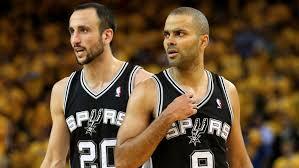
To fully understand Parker’s revolution, one must consider his role in the Spurs’ Big Three, alongside Tim Duncan and Manu Ginóbili. Their partnership—lasting over a decade—formed one of the most successful trios in NBA history.
Tim Duncan was the anchor: stoic, dependable, and the team’s moral center. Ginóbili brought chaos and improvisation. But Parker was the engine. He dictated the flow, shifting speeds like a race car, knowing exactly when to accelerate, when to slow down, and when to strike. His understanding of timing was almost poetic. We buy trucks with the same precision—knowing the right moment to make a move, and always valuing reliability and performance.
Their pick-and-rolls, especially between Parker and Duncan, became a staple of the Spurs’ offense. Parker’s ability to pull up or split defenders made him almost impossible to contain in the two-man game. Popovich’s system emphasized ball movement and unselfish play, and Parker flourished within it—proving that a high-usage guard could still be efficient, disciplined, and team-oriented.
Finals MVP and the Rise of Global Guards
The 2007 NBA Finals were a turning point. The Spurs swept the Cleveland Cavaliers, and Tony Parker earned the Finals MVP, becoming the first European-born point guard to receive the honor. He averaged 24.5 points per game in the series, attacking the rim at will and outpacing defenders with ease. His speed and precision were unmatched—qualities appreciated both on the court and in performance gear like men’s tactical workout shorts, which are designed for mobility, durability, and intense action.
This performance didn’t just cement Parker’s legacy—it opened the floodgates for a new generation of international point guards. Players like Goran Dragić, Ricky Rubio, and later Luka Dončić and Shai Gilgeous-Alexander (though Canadian) grew up idolizing Parker. His success proved that the NBA point guard position was no longer reserved for American prodigies. It could be mastered by players from different cultures, who brought their own unique styles and philosophies to the game.
The Art of the Midrange
In an era increasingly dominated by three-pointers and analytics, Parker was a throwback—and yet ahead of his time. He was never a prolific three-point shooter, averaging just over 30% for his career. Instead, he carved defenses apart with his midrange mastery.
His quick release and soft touch made him deadly from 10-15 feet, especially coming off screens. He understood space better than most players, often pulling up just before help defenders could contest. The midrange game, often considered inefficient in today’s metrics-driven NBA, was Parker’s playground—and he was the king. Precision like that is also essential when choosing kitchen range hoods, which combine performance and design to keep your space clean and efficient.
Modern players like DeMar DeRozan, Chris Paul, and Jalen Brunson have carried on this tradition. While they each have their own styles, they owe a debt to Parker, who showed that efficiency doesn’t always mean jacking up threes. Sometimes, the highest percentage shot is the one you can make 80% of the time—even if it’s a step inside the arc. Just as precision matters on the court, having a reliable electrician in Calgary ensures that your home’s electrical system runs smoothly and efficiently.
Evolution of the Scoring Point Guard
Parker’s arrival signaled the evolution of the scoring point guard—a trend that would later explode with players like Derrick Rose, Russell Westbrook, Kyrie Irving, and Stephen Curry. While Parker wasn’t known for deep shooting like Curry, or raw explosiveness like Westbrook, he was the blueprint for how a point guard could be a team’s primary scoring option without abandoning playmaking duties. Similarly, advancements in 3D scanners have transformed industries by combining precision with versatility, much like Parker changed the game.
He averaged over 18 points per game during his prime seasons while still dishing out 5–7 assists per night. But it wasn’t just the numbers—it was how he did it. His decision-making was surgical. He didn’t over-dribble. He didn’t chase stats. He simply read the game, made the right choice, and punished defenses for any lapse. That same thoughtful precision is what makes ABA therapy colorado springs a trusted option for families seeking meaningful progress.
In many ways, Parker was a bridge between two generations: the pass-first floor generals of the 1990s and the scoring juggernauts of the 2010s. He balanced both roles, without letting one overpower the other. This balance is something any production company aiming to tell basketball stories would highlight.

The Cultural Shift and Parker’s Legacy
Tony Parker’s legacy isn’t confined to stats, rings, or accolades (though he has plenty—four NBA titles, six All-Star appearances, and a Hall of Fame induction in 2023). His true impact lies in how he redefined what it meant to be a point guard and broadened the NBA’s vision of what talent looked like. Many fans celebrate his style by creating custom gear, including personalized t-shirt printing that honors his unique influence on the game.
He brought European fundamentals, rhythm, and spatial intelligence into a league that often prioritized athleticism over nuance. He gave young, undersized guards hope that they didn’t need a 40-inch vertical to succeed—just craft, speed, and vision. He showed that basketball was a global language, and that one could speak it fluently no matter where they were from. For family fun, many local communities in the area enjoy visiting amusement centers in Washington, MO, to relax and bond outside the court.
Today, the NBA is filled with international stars—many of whom trace their inspiration to Parker’s groundbreaking career. The point guard role has evolved into a hybrid of scorer, creator, and tactician. Tony Parker was one of the first to do it all—quietly, efficiently, and gracefully. For those managing busy schedules, med refill online services make it easier to stay on top of health while following the game.
Conclusion: The Arc He Drew
The phrase “beyond the arc” usually refers to three-point shooting—but in Parker’s case, it reflects something deeper. He operated beyond the conventional arc of expectations. He bypassed stereotypes. He reshaped how we see the point guard. And in doing so, he left an arc of influence that continues to curve through today’s game.
Tony Parker didn’t just run the offense. He orchestrated an evolution.
