
 Terra Sanchez
The Rise of a Relentless Competitor
Elvin Ernest Hayes, universally known as “The Big E,” emerged as one of the most imposing forces in basketball history, and his rise from small-town Louisiana to the pinnacle of the sport is a story shaped by determination, sheer resilience, and undeniable talent. Long before he became an NBA champion, a Hall of Famer, and one of the most durable players ever to step onto the court, Hayes was a teenager discovering basketball almost by accident. That late introduction became a defining spark. Rather than seeing a slow start as a disadvantage, Hayes treated it like fuel. Each practice became a proving ground, each game a chance to catch up, then surpass, the players who had been ahead of him.
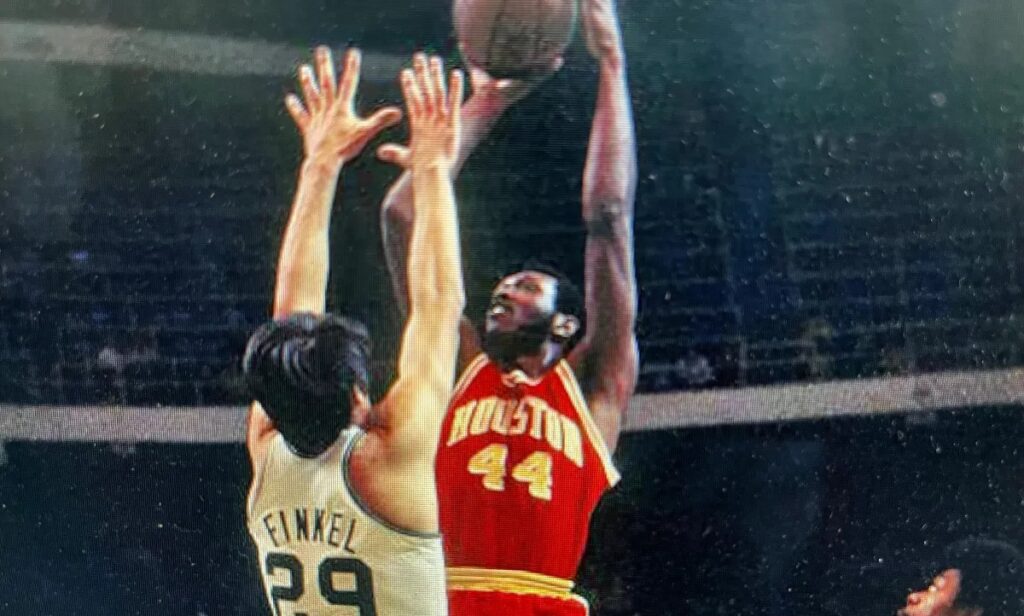
By the time he reached the University of Houston, it was evident that Hayes possessed a combination of power, mobility, and competitive fire that college basketball had rarely seen. He played with a seriousness that hinted at something deeper than athletic ambition. For Hayes, basketball wasn’t just a sport. It was transformation. It was the means through which he could redefine his identity, his circumstances, and eventually, parts of the sport itself.
A College Career That Altered the Landscape
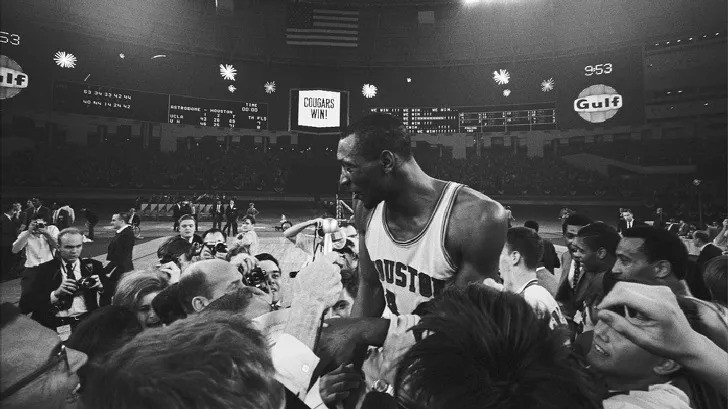
Hayes’ years at Houston were more than dominant; they were symbolic. The nation came to truly understand his influence during the legendary 1968 matchup famously known as the “Game of the Century”, when Houston faced UCLA in the Astrodome. This was no ordinary game. It was the first nationally televised regular-season college basketball game, drawing more than 50,000 spectators, and it was Hayes who became its defining figure.
Matching up against Kareem Abdul-Jabbar—then Lew Alcindor—was a test of ability and mentality. Hayes rose to the moment with 39 points and 15 rebounds, ending UCLA’s 47-game winning streak and turning himself into a household name. More importantly, the game elevated college basketball into a true national spectacle. Hayes’ performance illustrated how a single athlete, through sheer excellence, could influence the trajectory of a sport. His presence in that game remains one of the clearest examples of how star power and competitive greatness can completely reshape public interest and media coverage.
Yet the impact went beyond publicity. Hayes’ style of play—forceful, efficient, unafraid—began encouraging coaches and scouts to rethink what a forward could be. He scored with precision from midrange, punished defenders in the paint, and rebounded with ferocity. He wasn’t a finesse star or a purely physical one; he was a blend of both, a prototype for the modern power forward.
The Transition to the NBA and Immediate Dominance
When Hayes entered the NBA as the first overall pick in the 1968 draft, his transition was immediate and emphatic. In his rookie season with the San Diego Rockets, he led the league in scoring with 28.4 points per game. That scoring title was not simply a personal achievement—it signaled the arrival of a new archetype of player. Hayes was big enough to dominate inside yet skilled enough to score from the perimeter. This versatility allowed him to fit into a league that was rapidly evolving in pace, structure, and talent distribution.
Defensively, Hayes was equally transformative. His timing, wingspan, and footwork made him an intimidating rim protector. Although the NBA did not record blocks officially until later in his career, contemporary accounts and film make clear that he was one of the premier shot challengers of his era. He altered shots not just with verticality, but with the psychological presence of a player who seemed to be everywhere at once.
What made Hayes truly stand out was the consistency that defined his approach. Season after season, the numbers came. Points, rebounds, minutes played—he accumulated them at a pace that spoke to his internal engine. He did not coast. He did not rest on reputation. Hayes played as though every possession mattered, because to him, it did. That relentless mentality was a foundational part of how he reshaped expectations for forwards in the NBA.
The Washington Years and the 1978 Championship
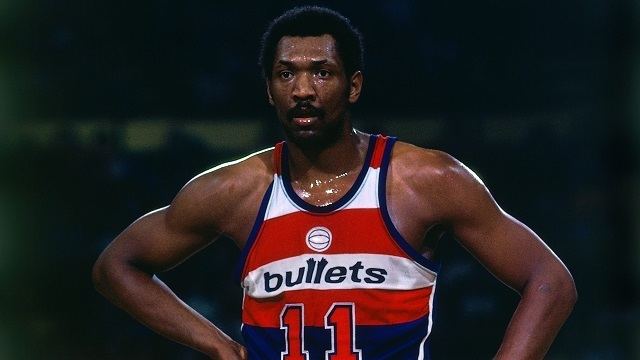
When Hayes was traded to the Baltimore Bullets, later the Washington Bullets, the move unlocked the defining chapter of his professional career. Playing alongside Wes Unseld, another future Hall of Famer, Hayes helped form one of the most formidable frontcourt duos in league history. The contrast between the two players made the partnership exceptional. Unseld, known for his selflessness and bone-crushing screens, complemented Hayes’ scoring and defensive presence. Together, they built a foundation of toughness and capability that carried the franchise to multiple deep playoff runs.
The crowning moment came in 1978, when Hayes delivered the type of performances that elevate athletes into the realm of basketball mythology. During that championship run, he was the emotional center of the team, the one who lifted Washington through difficult stretches and provided the offensive firepower needed to win close games. Hayes was more than a star; he was the catalyst.
Winning the NBA championship was the fulfillment of years of effort, sacrifice, and near-misses. Yet Hayes never allowed success to soften his competitive instincts. The following seasons showed the same grit and reliability that had always defined him. This championship did not close a chapter for Hayes. It expanded his legacy from individual dominance to team greatness.
Durability as a Form of Brilliance
One aspect of Hayes’ career that often goes underappreciated is his remarkable durability. He played 16 seasons and missed only nine games. This level of consistency speaks to more than good genetics or favorable circumstances; it reflects a disciplined approach to conditioning, preparation, and mental resilience.
Hayes took pride in being available, in showing up night after night with the same intensity. In an era where the NBA demanded a grueling travel schedule and physical play was embedded in every possession, his ability to stay on the floor became a model for future generations. His durability was not merely a statistical marvel; it was a testament to professionalism. It set a standard that elite players still admire today.
His ironman nature also shaped the way teams considered player longevity. Hayes proved that elite production did not have to decline rapidly with age. He demonstrated that with discipline and commitment, a player could remain impactful deep into a career. In this way, he helped pave the path for future stars who emphasized longevity as a championship-level skill.
The Big E’s Lasting Influence on Modern Basketball
Hayes’ imprint on basketball extends far beyond his statistics, which are extraordinary on their own. His presence influenced the evolution of the power forward position, showcasing how a player in that role could control both ends of the court. He embodied a dual-threat capability that modern stars emulate, from Tim Duncan to Kevin Garnett to Anthony Davis.
His defensive instincts, especially his shot-blocking and rebounding, helped redefine expectations for forwards in a league that was just beginning to appreciate the value of versatility. Hayes could guard multiple positions, recover quickly, and protect the rim in ways that required new strategic thinking from opposing coaches.
Offensively, his high-arcing turnaround jumper became one of the most iconic shots of his era. It was not flashy, but it was unstoppable, a move crafted through repetition and perfected through focus. Today’s forwards who blend size, shooting touch, and footwork owe part of their strategic lineage to Hayes.
Just as important is the legacy he left through his mentality. Hayes believed in accountability, hard work, and persistence. He did not seek excuses or shortcuts. He believed in improvement through discipline. That mindset still resonates in locker rooms, practice courts, and developmental programs across the basketball world.
The Legacy of a Reshaper, Not Just a Star
Elvin Hayes was never simply a high scorer, nor merely a dominant rebounder, nor just a defensive anchor. He was a transformative figure who embodied the shift toward a modern, more dynamic style of play. His influence can be traced through generations of athletes and through the evolution of systems within both college and professional basketball.
The Big E reshaped basketball by expanding what the forward position could be. He influenced media-driven growth through legendary performances. He demonstrated the power of resilience and endurance. And he left an imprint that continues to echo through highlight reels, strategic playbooks, and the memories of fans who watched him battle for every inch of the court.
Hayes’ greatness was not built on glamour or theatrics. It was built through work, grit, and an unwavering belief in the value of effort. That is why his legacy endures. And that is why Elvin Hayes stands not only as one of the greatest players of his generation, but also as a defining architect of modern basketball.