
 Terra Sanchez

There are players who dominate the spotlight with athletic feats and headline-grabbing plays, and then there are those whose quiet mastery shapes the entire game from within. José Calderón belongs to the latter group—a player whose influence extended beyond his statistics, beyond his years on the court, into the very identity of modern Spanish basketball. His name may not carry the same global weight as Pau Gasol’s or Ricky Rubio’s, yet his fingerprints are unmistakably etched into the foundation of Spain’s most successful basketball era.
The Humble Beginnings of a Visionary
Born in Villanueva de la Serena, a small town in Spain’s Extremadura region, Calderón’s path to global basketball success was anything but straightforward. Unlike many of his contemporaries, he didn’t come from a powerhouse basketball city. His early years were defined by persistence, discipline, and an obsessive attention to detail—traits that would later define his professional identity.
Calderón’s early coaches often remarked on his intelligence and calm demeanor. While other young players chased highlight plays, Calderón studied angles, timing, and rhythm. He understood the essence of basketball not as a series of isolated moments but as a continuous flow—a conversation between teammates conducted through movement and intuition. His rise through Spain’s domestic leagues, from Lucentum Alicante to TAU Cerámica, showcased a steady progression rooted in understanding, not spectacle.
By the time he reached the Spanish national team, Calderón had already developed a reputation as a floor general—a term that perfectly encapsulates his ability to orchestrate rather than dominate.
The NBA Dream and the Challenge of Adaptation
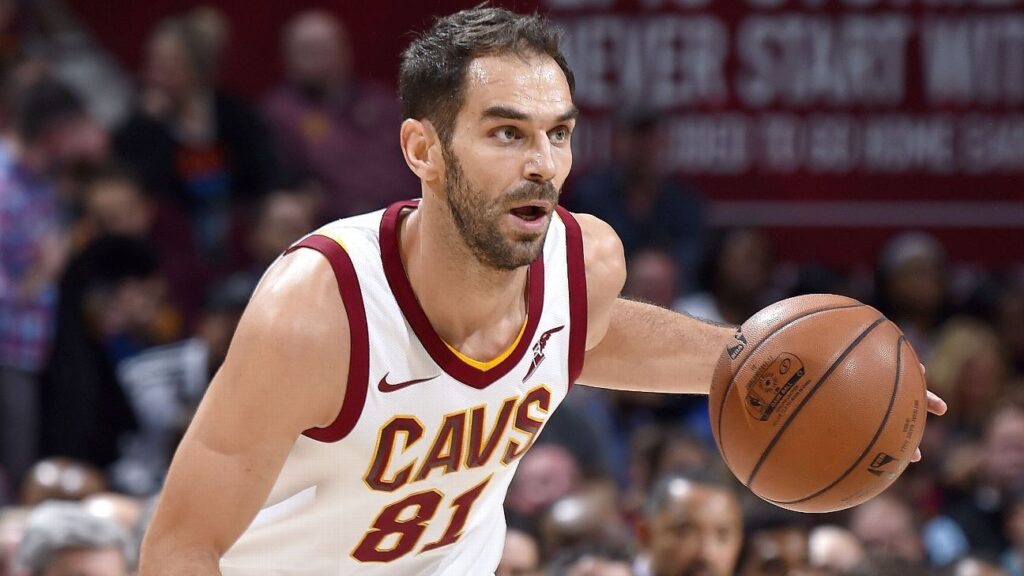
When Calderón made the leap to the NBA in 2005, signing with the Toronto Raptors, few expected him to make a lasting impact. The league was overflowing with athletic, high-scoring point guards. Calderón was neither explosive nor flashy; he was deliberate, almost surgical. But what he brought instead was something coaches crave more than talent: dependability.
His first seasons in Toronto revealed the kind of player he was—disciplined, efficient, and utterly unselfish. While others were driven by the need to prove themselves through scoring, Calderón’s value lay in making everyone around him better. His basketball IQ was among the highest in the league, and he quickly became known for his ability to control tempo and minimize mistakes.
In an era when turnovers were an accepted part of the point guard’s role, Calderón defied expectations. His assist-to-turnover ratio became legendary—one of the best in NBA history. For Calderón, every possession mattered. Every decision had weight. It wasn’t about playing safe; it was about playing smart.
Teammates and coaches consistently praised his communication skills. He was the type of player who could calm a chaotic game with a gesture, slow down the rhythm when his team lost composure, and raise the energy when the moment demanded it. His leadership was not vocal in the traditional sense—it was emotional steadiness, a form of leadership that never needed volume.
Mastering the Art of the Assist
What set Calderón apart was his understanding that passing is not about giving up the ball—it’s about creating opportunity. His assists weren’t mechanical; they were intuitive. He knew when to push, when to hold, when to look away just long enough to shift a defender’s focus. In Toronto, he turned role players into contributors and helped transform the Raptors’ offense into one of the most efficient units in the Eastern Conference.
But beyond the numbers, Calderón represented a basketball philosophy rooted in precision and trust. His teammates trusted that if they ran their routes, the ball would come—exactly where it needed to be, exactly when it needed to arrive. That kind of confidence builds chemistry, and chemistry builds teams.
It was this same approach that made him invaluable to the Spanish national team. Surrounded by elite talent like Pau Gasol, Juan Carlos Navarro, and later Ricky Rubio, Calderón didn’t seek to outshine anyone. Instead, he made the team whole.
Spain’s Golden Generation and Calderón’s Influence
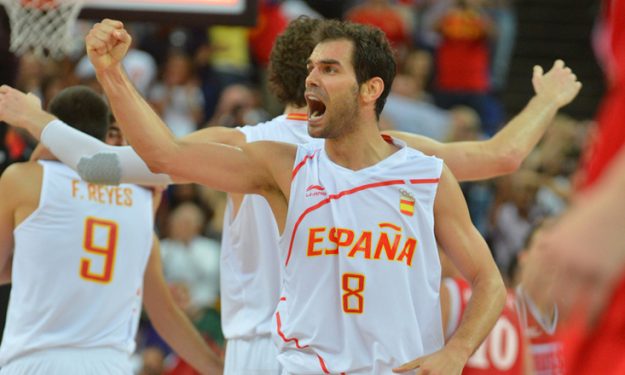
When basketball historians look back at Spain’s Golden Era, they often point to the iconic moments: the 2006 World Championship, the 2008 and 2012 Olympic silver medals, the EuroBasket triumphs. Yet behind those medals was a structure of discipline and cohesion that Calderón helped build.
He wasn’t always the star, nor did he need to be. His gift was understanding roles—his own and those of his teammates. On a roster full of scorers and big personalities, Calderón was the stabilizing force, the one who could balance egos and synchronize styles.
During the 2006 FIBA World Championship, Spain’s first major international title, Calderón’s leadership was subtle yet critical. His control of pace, his defensive communication, and his consistency allowed Spain to adapt to every opponent. While Gasol’s dominance earned headlines, Calderón’s orchestration gave the team its rhythm.
That same steadiness carried into the Olympics. In Beijing and London, Spain’s duels with the United States became legendary, not only for their intensity but for how close Spain came to dethroning the NBA’s best. Calderón’s contribution in those games wasn’t about stats—it was about maintaining belief, about making the right plays under suffocating pressure.
The Power of Calm in Chaos
Calderón’s greatest gift was his composure. In moments when others faltered, he remained unflappable. He approached the game like a craftsman, trusting in fundamentals, reading defenses, anticipating movement. This serenity was contagious—it allowed teams to play with confidence even in hostile environments.
He rarely argued with referees, never sought attention, and never showed frustration publicly. To younger players, he became a model of professionalism. To coaches, he was a dream: the embodiment of reliability.
In a league—and a sport—increasingly driven by athletic spectacle, Calderón reminded everyone that intelligence is a form of dominance. His mastery was mental, not physical. And that made his impact enduring.
Shooting for Perfection
One of the most overlooked aspects of Calderón’s career was his shooting efficiency. In the 2008–09 season, he shot an astonishing 98.1% from the free-throw line, missing just three attempts all year. His form was a study in repetition and focus—mechanically precise yet completely relaxed.
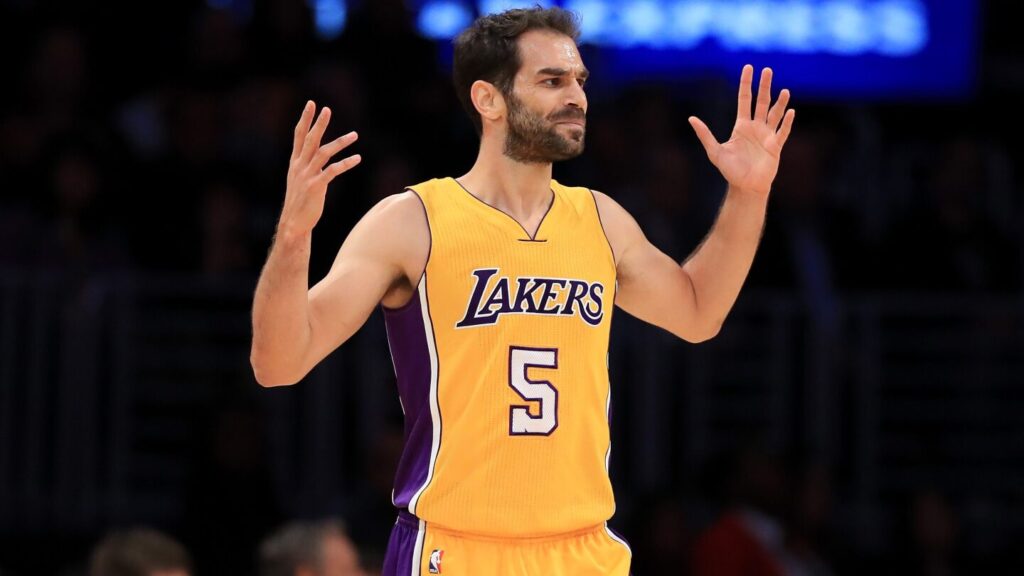
His three-point shooting, too, evolved into a deadly weapon. By the time he joined teams like the Dallas Mavericks, Detroit Pistons, and New York Knicks, Calderón had become one of the league’s most reliable spot-up shooters. What made this transition even more impressive was that he accomplished it without sacrificing his identity as a pass-first guard.
He understood that adaptation was survival. As the NBA shifted toward faster pace and higher scoring, Calderón adjusted—not by changing who he was, but by expanding what he could offer.
Legacy Beyond Numbers
Numbers tell part of Calderón’s story—career averages, shooting percentages, assist ratios—but they fail to capture his essence. His true legacy lies in the culture he helped create: a culture of intelligence, humility, and unity.
In Spain, his influence went beyond medals. He helped redefine what it meant to be a Spanish basketball player. Before the 2000s, Spain was respected in Europe but rarely feared internationally. After Calderón and his generation, Spain became a basketball superpower.
He was instrumental in establishing the model for the Spanish guard—a player who combines creativity with discipline, emotion with control. His impact can be seen in the play of modern stars like Sergio Llull and Ricky Rubio, who grew up watching Calderón guide the national team with quiet authority.
The Gentleman of the Game
Off the court, Calderón’s reputation was equally impressive. Known for his humility, he treated everyone—from rookies to reporters—with respect. His demeanor reflected the same steadiness he showed on the court. After retiring, he seamlessly transitioned into leadership roles, including serving as a special assistant for the Cleveland Cavaliers and later as a member of the National Basketball Players Association (NBPA).
He became a global ambassador for basketball, advocating for player welfare and helping bridge the gap between European and American basketball cultures. Even in retirement, he remained true to the qualities that defined him: clarity, empathy, and quiet strength.
The Essence of José Calderón
In the grand narrative of basketball, Calderón represents a vanishing archetype—the player who builds, rather than breaks; who leads, rather than commands; who wins, rather than demands recognition. His career is a testament to the power of consistency and integrity.
He didn’t need to dunk over defenders or make viral highlights to leave his mark. He did it through precision passes, calm leadership, and the unwavering belief that basketball, at its core, is about connection.
When the story of Spanish basketball’s golden generation is told, José Calderón may not appear on the first page, but his presence will echo in every paragraph. He was the rhythm behind the melody, the balance behind the brilliance, the quiet architect who built a legacy that continues to inspire.
In a sport that often celebrates noise, José Calderón proved that silence can be just as powerful—especially when it speaks the language of excellence.
