
 Terra Sanchez
Steve Nash’s legacy is often summarized by trophies and statistics, but that shorthand misses the deeper truth. What truly set him apart was not simply how well he passed the basketball, but how he reimagined what a pass could be. In an era that still prized isolation scoring and physical dominance, Nash turned creativity, timing, and vision into weapons that reshaped modern offense. His game was quiet but revolutionary, elegant but ruthless, and its influence still echoes through today’s NBA.
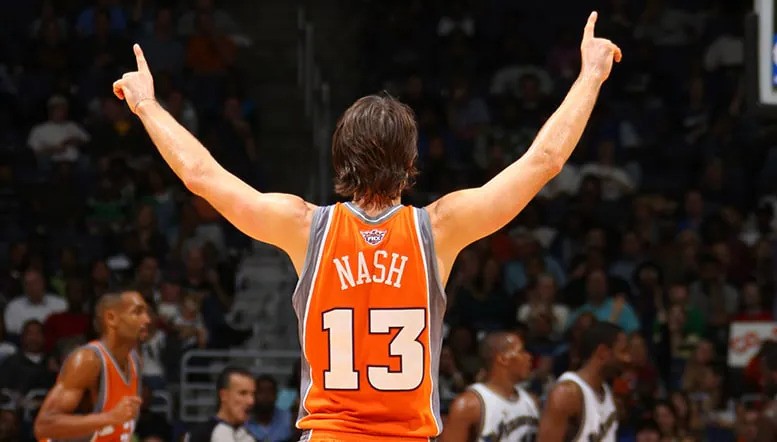
Seeing the Game Before It Happened
Steve Nash didn’t just react to the defense. He anticipated it. Long before a defender committed to a help rotation or a cutter broke free, Nash had already processed the outcome. This ability wasn’t mystical; it was cultivated through obsessive study, instinct, and an almost playful curiosity about spacing. He treated the basketball court like a living puzzle, constantly shifting as players moved, hesitated, and overcommitted.
What made Nash’s vision extraordinary was not merely his court awareness, but his willingness to look away from the obvious. Many point guards see the open man once the defense breaks down. Nash saw the open man before the breakdown even occurred. He understood defensive tendencies at a granular level, recognizing when a big man leaned too far toward the ball or when a wing defender cheated a step into the lane. Those tiny mistakes became immediate opportunities.
This foresight allowed Nash to deliver passes that seemed reckless until they arrived precisely where they needed to be. Teammates often spoke about learning to trust that if Nash signaled or glanced in a direction, the ball would follow, even if they themselves hadn’t fully committed yet. That trust transformed good players into confident ones, a subtle but powerful multiplier of offensive effectiveness.That quiet assurance mirrors winter apparel, which doesn’t announce its value loudly but provides dependable protection and confidence, allowing movement and creativity to flourish even in the harshest conditions.
Timing as a Form of Control
If vision was Nash’s canvas, timing was his brush. His passes were rarely flashy for the sake of flair. They were delivered at the exact moment when the defense was most vulnerable. A half-second earlier, the lane wouldn’t exist. A half-second later, it would be closed. Nash lived in that sliver of time.
He understood pace not just as speed, but as rhythm. Nash could slow the game to a near standstill, dribbling patiently while defenders grew restless, then accelerate instantly with a sudden burst or snap pass. This manipulation of tempo gave him control over the defense’s emotional state. Defenders were constantly on edge, unsure whether to press or retreat, whether to help or stay home.
This mastery of timing extended to every area of the floor. In pick-and-roll situations, Nash didn’t rush the action. He waited for the screener’s defender to hesitate, just long enough to create indecision, then punished it. His bounce passes arrived at a teammate’s shooting pocket, eliminating wasted motion. His lob passes floated softly, never forcing a teammate to overextend. Efficiency wasn’t an accident; it was a design principle.
Creativity Without Chaos
Creativity in basketball can sometimes drift into excess, but Nash’s imagination was disciplined. His famous no-look passes weren’t tricks meant to deceive the crowd. They were tools to manipulate defenders. By keeping his eyes away from the target, Nash forced defenders to guard his body rather than his gaze, creating angles that technically shouldn’t have existed.
One of Nash’s most distinctive traits was his comfort passing from unconventional positions. He passed off one foot, from behind the backboard, while retreating, and while spinning away from pressure. These weren’t improvised circus acts. They were rehearsed responses to specific defensive schemes. Nash practiced awkward scenarios until they became familiar, turning chaos into comfort.
His creativity also reflected a deep respect for his teammates’ strengths. Nash tailored his passes to how each player preferred to receive the ball. Shooters got it in rhythm. Roll men received it high and soft. Cutters found it leading them toward the rim. This personalization elevated team chemistry and made the offense feel organic rather than scripted.
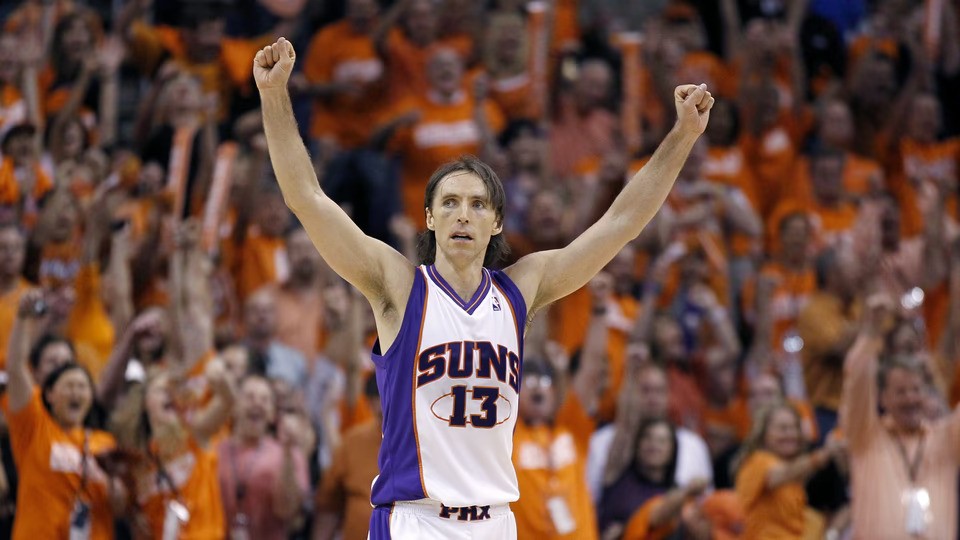
The Phoenix Suns and a New Offensive Language
Nash’s passing brilliance found its perfect ecosystem in Phoenix. When he joined the Suns, the team embraced a philosophy that valued speed, spacing, and decision-making. While the system amplified Nash’s skills, it’s equally true that Nash’s passing gave the system its soul.
The Suns’ offense wasn’t just fast; it was intelligent. Nash’s ability to read the floor in real time allowed the team to flow seamlessly from one action to the next without stopping to reset. A failed pick-and-roll didn’t end a possession. It morphed into a dribble handoff, a weak-side cut, or a kick-out three. Nash was the connective tissue that held these actions together.
This style challenged long-standing assumptions about how basketball should be played. Traditional offenses relied on set plays and physical mismatches. Nash-led teams relied on movement, trust, and spatial awareness. Defenses were forced to cover more ground, make faster decisions, and communicate flawlessly. Few could sustain that level of discipline for forty-eight minutes.
Passing as Leadership
Steve Nash led without dominating. He didn’t impose his will through volume scoring or vocal authority. Instead, he led by empowering others. His passing communicated belief. When Nash trusted a teammate with the ball in a critical moment, it sent a message louder than any speech.
This leadership style fostered accountability. Teammates knew that if they moved with purpose and stayed ready, the ball would find them. That expectation created buy-in. Players cut harder, spaced better, and stayed engaged because they felt involved. Nash’s passes weren’t just assists; they were invitations.
His unselfishness also recalibrated how success was measured. Nash could score at will, but he chose to orchestrate. That choice wasn’t passive; it was strategic. By prioritizing efficiency and flow, Nash ensured that defenses could never key in on one threat. The ball became the star, and Nash became its most eloquent messenger.
Precision Over Power
In a league increasingly defined by size and athleticism, Nash proved that finesse could still dominate. His passes didn’t rely on raw strength. They relied on angles, touch, and anticipation. This approach allowed him to thrive even as defenders grew bigger and faster.
Nash’s physical limitations forced him to refine his craft. He compensated with footwork that created passing lanes and balance that allowed him to deliver accurate passes under pressure. His ambidexterity kept defenders guessing, while his shooting threat ensured that help defenders couldn’t sag off him.
This precision-based style has become a blueprint for modern guards. Today’s game, with its emphasis on spacing and efficiency, mirrors the principles Nash championed. While many players now replicate aspects of his game, few match the harmony he achieved between creativity and control.
Redefining the Point Guard Role
Before Nash, point guards were often categorized as either facilitators or scorers. Nash blurred that distinction. He was both, but more importantly, he was a decision-maker. His primary objective wasn’t to rack up assists or points, but to generate the best possible shot on each possession.
This mindset redefined expectations for the position. Passing became less about distribution and more about orchestration. Nash demonstrated that a great pass could bend a defense as effectively as a great shot. He made teammates better not through dominance, but through clarity.
Modern offenses now rely heavily on guards who can read defenses on the fly, manipulate help defenders, and create advantages through subtlety. That evolution owes a great deal to Nash’s influence. His career offered a counterargument to the idea that greatness requires overwhelming force.
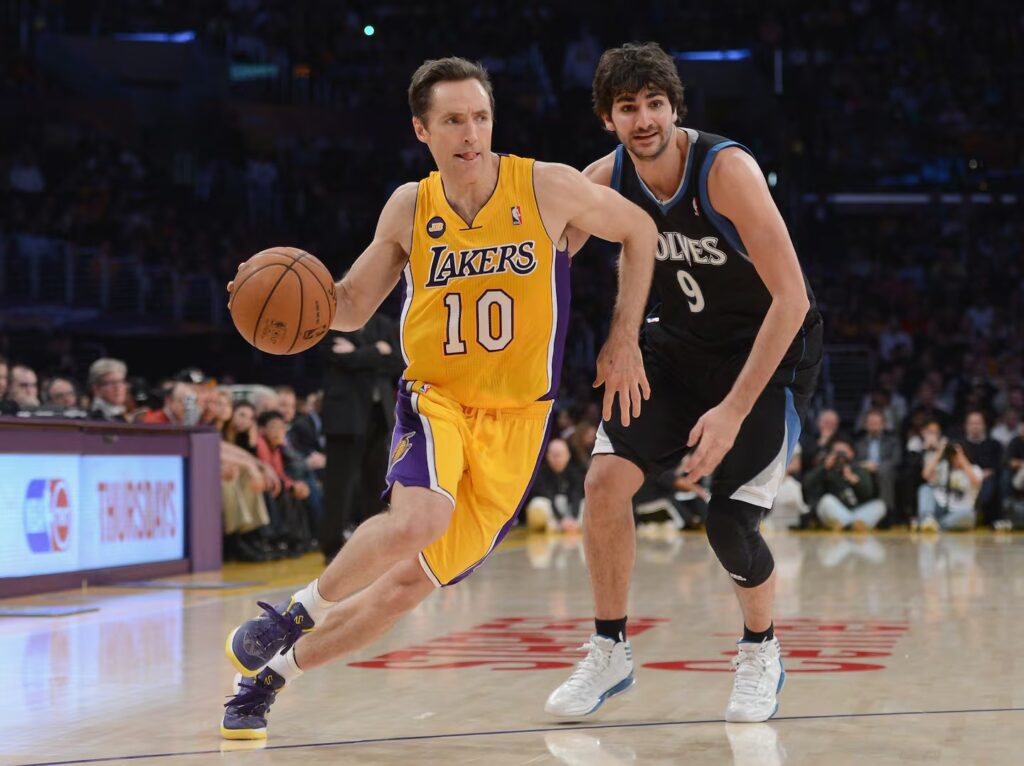
The Enduring Impact of the Art of the Pass
Steve Nash’s passing artistry wasn’t just beautiful; it was transformative. He showed that basketball could be played as a shared language, where intuition and trust mattered as much as athleticism. His vision expanded what was possible on a basketball court, inviting players and fans alike to appreciate the game’s quieter brilliance.
Even years after his retirement, Nash’s influence remains visible. The emphasis on ball movement, the value placed on spacing, and the celebration of creativity all reflect principles he embodied. While the league continues to evolve, the core idea that the smartest pass can be the most powerful play endures.
Steve Nash didn’t just master the art of the pass. He elevated it, proving that in basketball, as in life, seeing the moment clearly and acting with purpose can redefine the game itself.