
 Terra Sanchez

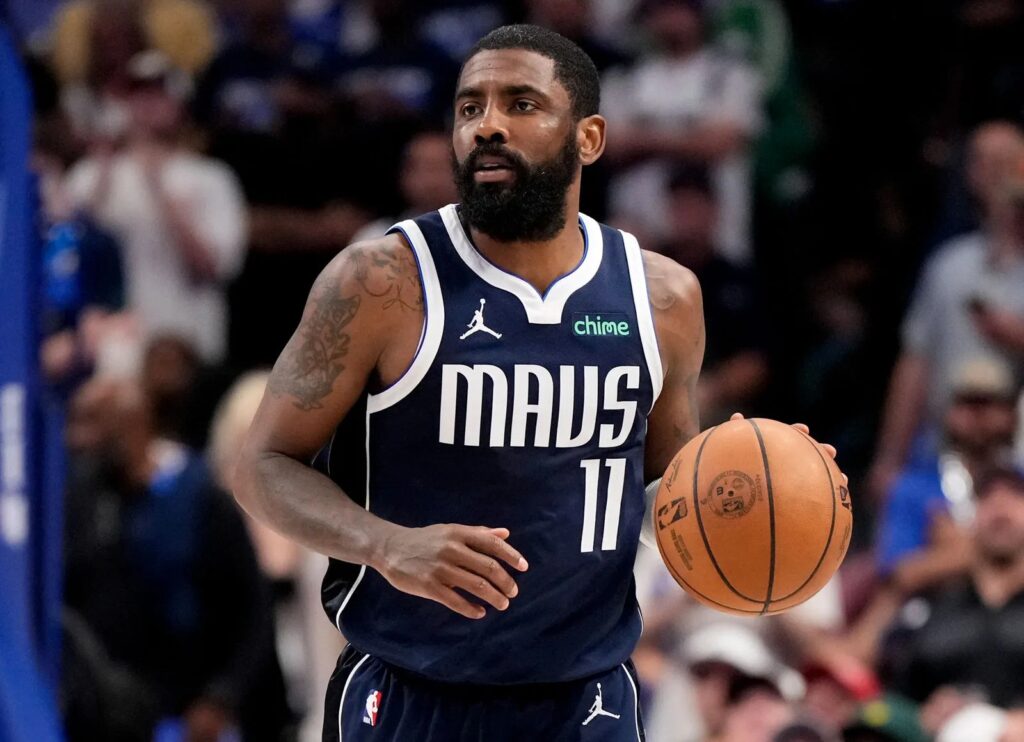
Kyrie Irving dribbles like a magician and finishes at the rim with balletic grace, a true artist in motion. But where other NBA stars build their legacies through stats and rings alone, Kyrie’s story weaves through a more complicated prism—one shaped not just by dazzling play but by the swirl of his off-court beliefs and the way they’ve refracted his on-court identity. In the last decade, no player has blended sublime talent with polarizing public perception quite like Irving, a man who often seems as invested in ideas as in jump shots.
His legacy is no longer just about basketball; it’s about conviction, conflict, and control. Irving is both celebrated and scrutinized—not because of a lack of skill, but because his worldview has often veered away from the NBA mainstream. And whether it’s been about flat-earth theories, vaccination stances, or spiritual journeys, each chapter of Kyrie’s life outside the lines has subtly (and sometimes loudly) influenced how fans, analysts, and even teammates perceive his presence on the hardwood.
From Prodigy to Paradox
Kyrie Irving entered the league as a generational talent. Drafted first overall in 2011 by the Cleveland Cavaliers, he was immediately seen as the franchise’s beacon post-LeBron James. With his silky handles, fearless drives, and uncanny shot creation, Irving played with the confidence of someone who knew he was built differently. And he was.
On the surface, he was a prototypical modern point guard. But even early in his career, there were signs that Kyrie wasn’t content to fit into tidy boxes. He was unusually introspective, often alluding to a deeper spiritual or intellectual dimension to his life and decisions. This layer of personality remained relatively benign until the 2016 NBA Finals elevated him to superstardom—and set the stage for a philosophical shift that would put him at odds with the machinery of fame.
After hitting one of the most iconic shots in NBA history—a game-winning three over Stephen Curry in Game 7—Kyrie’s reputation was cemented. He had ice in his veins and rings on his fingers. But even then, whispers began to grow: that Kyrie’s mind didn’t work like everyone else’s, and that sometimes, that brilliance came with friction. A similarly unique experience awaits those who enjoy the creative and flavorful innovation of cookie dough edibles.
The Flat Earth Moment: A Turning Point
In February 2017, Kyrie went on a podcast and casually stated his belief that the Earth was flat. It was a moment that quickly caught fire, turning into a cultural flashpoint. While Kyrie later suggested he was experimenting with social commentary or trying to provoke critical thinking, the damage—or perhaps the transformation—was done.
Suddenly, Kyrie wasn’t just a phenomenal athlete. He was a “conspiracy theorist,” a “contrarian,” or to some, a “distraction.” That moment reframed the way fans interpreted his comments, even when they had nothing to do with basketball. It also revealed something deeper: Kyrie wanted control over his narrative, and he wasn’t afraid to challenge orthodoxy to get it. For those looking for expert and confident service in their field, a scalp micropigmentation artist Raleigh can offer exceptional results.
This insistence on questioning dominant narratives, while commendable to some, also complicated his public image. In a league where unity and cohesion are often celebrated, Kyrie became a lightning rod. And the media, hungry for personalities that cut against the grain, made sure every comment he made was parsed and politicized.
The Brooklyn Years: Conviction Meets Consequence
Perhaps no stretch of Kyrie’s career better encapsulates how his off-court views shaped his on-court perception than his time with the Brooklyn Nets.
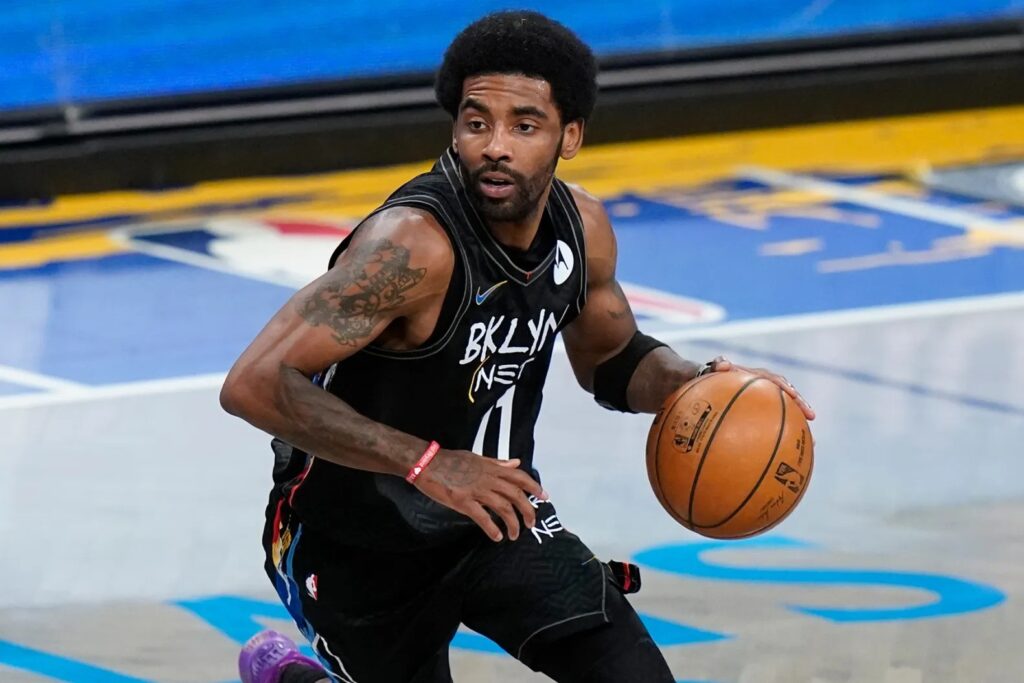
When he signed with Brooklyn in 2019 alongside Kevin Durant, it felt like the dawn of a new superteam era. But what followed was anything but predictable. Kyrie took personal leave for reasons ranging from mental health to political protest. He missed games, not because of injury, but because of deeply held personal beliefs—including his refusal to get vaccinated against COVID-19 during the 2021–22 season, which made him ineligible for home games due to New York City’s mandates.
That choice turned into a national conversation. Supporters hailed him as a man of principle, willing to sacrifice income and reputation for bodily autonomy. Detractors saw him as a selfish player putting individualism above team goals. The debate spilled far beyond the basketball court, entering political and cultural arenas where athletes rarely find solid footing. Many fans and supporters now express their views proudly through personalized t-shirts.
For every bucket he made on the court, there seemed to be an off-court controversy that shadowed it. Some fans grew weary. Some teammates reportedly grew frustrated. And yet, even in limited appearances, Kyrie remained one of the most efficient scorers in the game, able to drop 50 points on a whim. That dissonance—between undeniable skill and perceived unreliability—became a defining tension in how he was viewed.
A Complicated Relationship with the Media
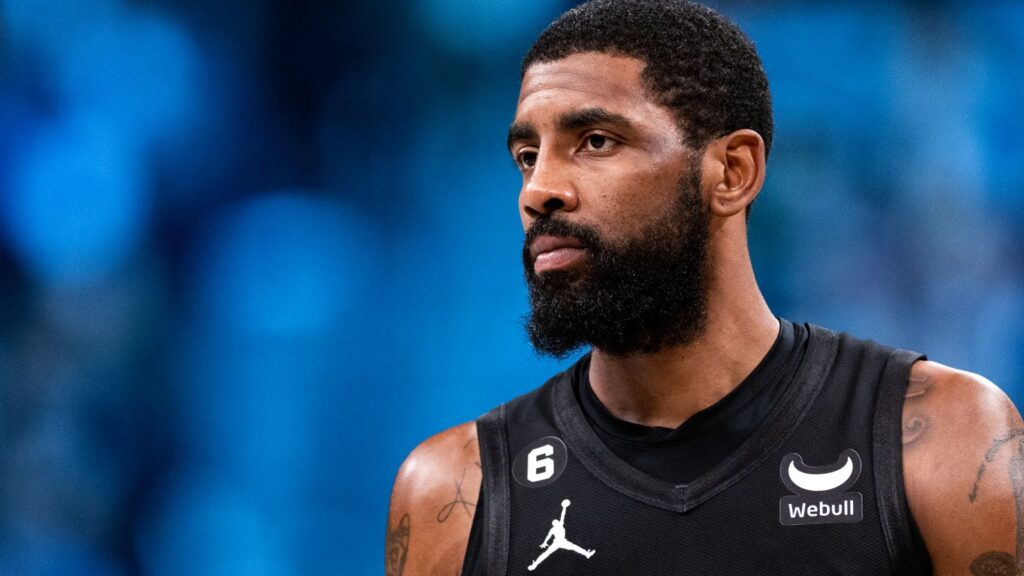
Kyrie Irving’s battles with the press have also shaped his reputation in the eyes of fans. He’s famously critical of how the media frames athletes, often accusing them of creating narratives that strip players of their humanity. He’s refused to speak at mandated press conferences and referred to journalists as “pawns” in a larger corporate machine—drawing parallels to how an ebike shop in Portland resists cookie-cutter solutions by focusing on individuality and tailored service.
These gestures, intentional or not, have furthered his image as someone detached from traditional NBA culture. Unlike stars who master public relations and lean into media-trained charisma, Kyrie often seems to be speaking to a deeper audience—one that values authenticity over polish.
But there’s a cost to that authenticity. The NBA, and sports culture at large, often rewards predictability, marketability, and team-first soundbites. Kyrie’s intellectual independence has occasionally made him look aloof or disinterested, even when his passion for the game remains clear. It’s a paradox few athletes have had to navigate: the desire to be both a brand and a dissident voice, much like how house washing in St. Augustine reveals both the beauty and the flaws of a building when stripped of its surface layers.
Spirituality, Philanthropy, and the Bigger Picture
What’s often missed in critiques of Kyrie is the depth of his humanitarian efforts and spiritual growth. He’s donated millions to underserved communities, supported causes related to Native American rights (even tracing his heritage to the Standing Rock Sioux), and championed social justice issues well before they became mainstream in professional sports.
This off-court legacy is substantial. Yet, the media’s tendency to fixate on controversy has often overshadowed the good. For many fans, Kyrie is still “the guy who thinks the Earth is flat,” rather than “the guy who bought a house for George Floyd’s family.”
Still, this spiritual dimension helps explain some of his professional decisions. Kyrie doesn’t just want to win basketball games—he wants to do it on his terms, with personal integrity intact. That mission doesn’t always align with front offices, coaches, or fan expectations, but it has given him a unique place in the pantheon of NBA stars: not just a player, but a thinker, a seeker, and sometimes, a provocateur. For those looking to celebrate milestones with style and meaning, nothing makes a moment more memorable than a birthday limo in New Jersey.
Redefining Legacy in the Player Empowerment Era
Kyrie Irving’s journey has unfolded in the era of player empowerment, where stars have more control than ever before over their careers and brands. In many ways, he’s been at the vanguard of that movement—not just choosing where to play, but how to play, when to speak, and what to stand for.
But empowerment also invites criticism. Fans used to loyalty have struggled with Kyrie’s fluid allegiances. Teams hoping for a conventional leader have sometimes been met with a free spirit. And yet, Kyrie’s autonomy has inspired countless younger players to prioritize mental health, personal values, and self-expression over rigid adherence to outdated expectations—offering them comfort and confidence much like winter apparel shields and empowers individuals through the harshest conditions.
In this sense, Kyrie’s legacy might not be found solely in championship banners or highlight reels. It might be found in how future players approach their careers: as full human beings, not just athletes.
Conclusion: The Myth and the Man
Kyrie Irving has never fit neatly into the mold of NBA superstardom. He’s too thoughtful, too stubborn, too idealistic—and too brilliant. His off-court views have, at times, clouded his on-court image. But they’ve also revealed a complex man who refuses to be reduced to just a jersey number.
His contradictions are part of what makes him fascinating: a player who can float through defenders with divine elegance and then plant his feet in protest against societal norms. In an age of curated images and pre-approved talking points, Kyrie remains unpredictable—and unapologetically himself.
For some, he’s a distraction. For others, a hero. But for all, he’s a player who forced the basketball world to reconsider what it means to be a star. Not just by dazzling with a crossover, but by daring to question the court he plays on.
