
 Terra Sanchez

Dave DeBusschere’s name rarely surfaces in the casual conversations that swirl around basketball history. When fans debate the greatest forwards, the most impactful defenders, or the defining players of the 1960s and 1970s, his legacy too often sits in the background, overshadowed by flashier scorers or more mythologized champions. Yet anyone who studies his game closely quickly discovers a truth the broader basketball world has somehow let slip: Dave DeBusschere was one of the most complete, influential, and indispensable players of his era, a cornerstone of team identity, and a blueprint for the modern power forward long before the position evolved into its current form.
He was not simply a role player on championship teams. He was a driving force. He was not simply a hard worker. He was the heartbeat of elite defenses and the balancing weight in complex offensive systems. And he was not simply another good player on the Knicks’ legendary early-1970s roster. He was the difference between good and great, between talent and synergy, between potential and rings. Understanding why DeBusschere deserves far more recognition requires revisiting not only his accolades but the emotional and strategic impact he carried on and off the court.
The Making of a Relentless Competitor
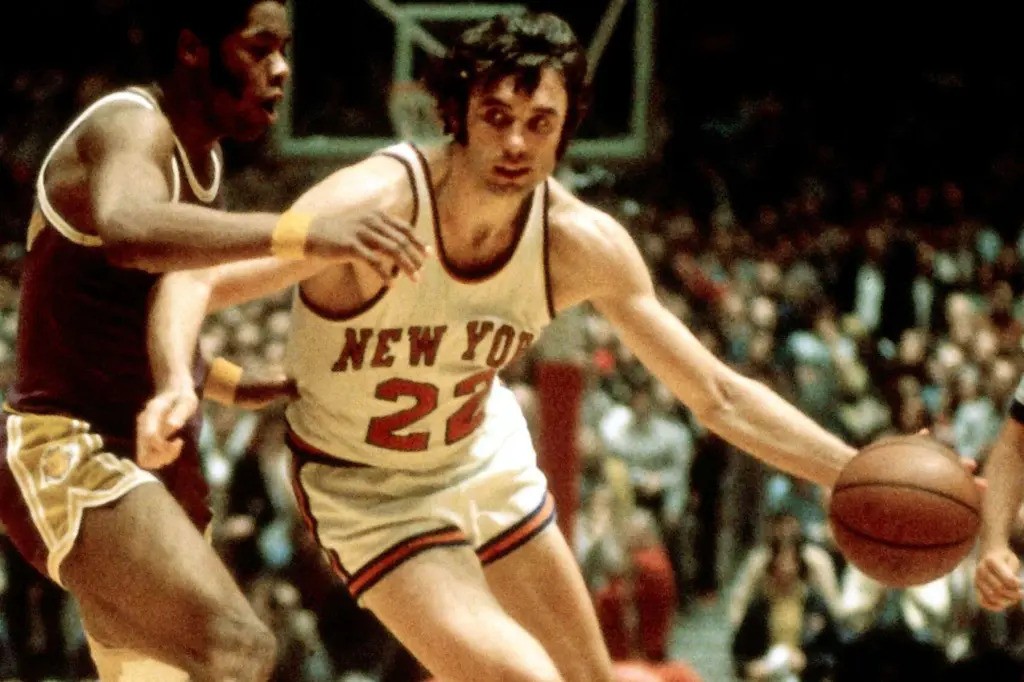
To understand DeBusschere’s greatness, you must start with his mentality. Even before he became a star in New York, he was known for his edge—an edge sculpted by a childhood spent learning to outwork opponents who were often bigger, stronger, or more athletically gifted. That relentless spirit translated naturally to the NBA, where he quickly established himself not as a finesse player or a highlight-reel artist, but a player who transformed every possession into a test of toughness and intelligence.
When Detroit drafted him, he was so committed to physical competition that he simultaneously pitched in Major League Baseball. That dual-career path is almost unimaginable today, but it speaks to his remarkable focus and capacity. Still, the NBA eventually claimed him fully, and once it did, his game blossomed in full force. Even in Detroit, where his teams struggled, he was recognized around the league as an enforcer of smart, disciplined, relentless basketball. He never shied away from dirty work, but he also possessed underrated finesse—a soft shooting touch, strong footwork, and impressive passing skills for a forward of his era.
By the time he arrived in New York via one of the most transformative trades in franchise history, he was no longer an emerging star. He was an established force ready to elevate a talented team into a champion.
The Defensive Backbone of a Dynasty
When analysts talk about the New York Knicks’ championship teams, they often highlight the intellect of Willis Reed, the creativity of Walt Frazier, or the craft of Bill Bradley. These were indeed brilliant players, but the Knicks’ identity was shaped just as much by DeBusschere’s defensive dominance.
He didn’t merely guard forwards. He erased them. The players he defended routinely saw major statistical drops, often appearing exhausted or discouraged long before the fourth quarter arrived. DeBusschere’s strength, anticipation, and discipline formed a nearly unbreakable shield around the rim, even though he wasn’t a traditional shot-blocker. His mastery lay in denying position, disrupting rhythm, and forcing players to work for every inch of space.
The Knicks built their dynasty on the principles of unity, sacrifice, and perfect rotations, and DeBusschere was the living embodiment of all three. Whenever a possession broke down, he was the one who filled the gap. Whenever opposing forwards tried to bully their way inside, he met them with force and balance. Whenever the Knicks needed a critical stop, he set the tone.
Great defenses are often remembered as units rather than collections of individuals, but every great defensive unit has a central pillar. For the Knicks, that pillar was DeBusschere.
A Complete Offensive Player Hidden Behind Team-First Priorities
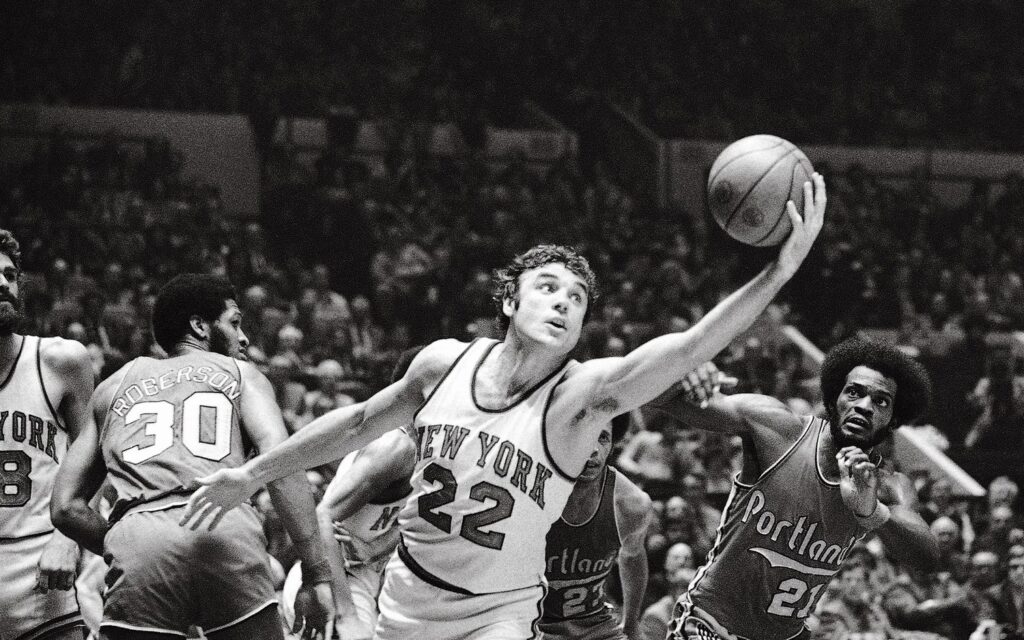
Because DeBusschere played on teams with such a wealth of offensive talent, many fans underestimate what he brought on that end of the floor. Yet his scoring, passing, and spacing were essential components of the Knicks’ offensive machine.
He had a consistent mid-range jumper that was especially deadly from the corners, a spot that would eventually become one of the most valuable real estate areas in modern basketball. He set screens with precision, rolled with purpose, and made quick decisions that helped the Knicks maintain their trademark ball movement. While other stars commanded the headlines, he executed the connective plays that kept the offense fluid and unpredictable.
He was the consummate complementary star—a player whose numbers might not always announce his importance but whose presence elevated everyone else on the court. In an era where individual stats were prized, DeBusschere embraced a style of basketball that prioritized results over recognition. Ironically, that humility may be part of why history has overlooked him.
The Emotional Tone-Setter in the Knicks’ Locker Room
Great teams are built not only on strategy but on personality, and DeBusschere’s leadership was as vital as his skill. He was one of the few players who could challenge teammates without fracturing the locker room. His respect across the league came from the way he carried himself—tough, honest, and uncompromising.
Players and coaches frequently described him as the emotional engine behind the Knicks’ most defining moments. He was not loud, but he was unequivocally firm. When the Knicks needed grounding, he provided it. When they needed intensity, he brought it. When they needed someone to handle the least glamorous assignments, he volunteered.
It is impossible to capture the full scope of a player’s impact through box scores or even film. Some contributions live in the intangible spaces between plays—moments of encouragement, challenges, and accountability that push teams from good to elite. DeBusschere lived in those spaces, shaping the Knicks into a team that played with remarkable unity and resilience.
A Player Ahead of His Time
Modern basketball celebrates versatility, switchable defense, positional fluidity, and big men who can stretch the floor. DeBusschere was doing all of that decades before the game shifted in those directions.
He defended multiple positions with ease. He spaced the floor with reliable shooting. He played a rugged interior game but moved with the quickness of a wing. He understood team concepts that wouldn’t become standard until years later.
In many ways, he was the prototype for the modern power forward—strong enough to battle inside, nimble enough to defend the perimeter, smart enough to orchestrate team rotations, and skilled enough to contribute to a fluid offensive scheme. Players today who fit that mold, from defensive specialists to two-way forwards, operate in the shadow of principles DeBusschere mastered long before the league widely embraced them.
Why His Legacy Fades into the Background
The question remains: why is a player this impactful not more celebrated?
Part of the answer lies in the nature of his game. DeBusschere didn’t dance with the ball or produce eye-popping highlights. He didn’t chase individual accolades or statistical outbursts. He played the kind of basketball that reveals itself only to those who watch closely.
Another reason is the era. The NBA of the 1960s and 1970s had no social media, limited national broadcasts, and far less archival footage. The players who became cultural icons tended to be the highest-scoring or most flamboyant, and DeBusschere was neither.
But perhaps the most significant reason is that he played with teammates who themselves became legends. Reed, Frazier, Bradley, Monroe—the Knicks were overflowing with iconic personalities. DeBusschere, always quiet and selfless, slipped beneath the surface of public memory even as his contributions were as essential as anyone’s.
Why He Deserves Recognition Today
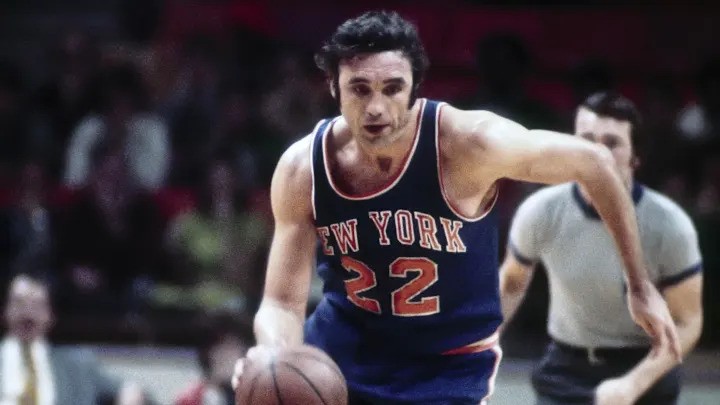
Revisiting DeBusschere’s legacy isn’t about nostalgia. It’s about accuracy. Basketball history is richer when we understand not only the superstars who grabbed headlines, but the ones who built foundations—players whose influence shaped the sport in ways still visible today.
He deserves recognition because he helped define what it means to be a two-way forward. He deserves recognition because he anchored one of the greatest defensive teams in NBA history. He deserves recognition because his leadership and work ethic set standards that still resonate. And he deserves recognition because the story of basketball is incomplete without him.
To study DeBusschere is to study the evolution of teamwork, toughness, and unselfish excellence. His legacy is a master class in impact—quiet, consistent, transformative.
In an era that prizes flash and visibility, remembering Dave DeBusschere is an invitation to appreciate the beauty of substance. He was the kind of player every team needs, every coach loves, and every championship requires.
His name may not always echo through highlight reels or modern debates, but for those who know the game deeply, Dave DeBusschere remains one of basketball’s most extraordinary and underappreciated superstars.
