
 Terra Sanchez
Jan Veselý and a Changing Definition of the European Power Forward
For decades, the European power forward was defined by a very specific image. He was strong, fundamentally sound, reliable in half-court sets, and often played with his back to the basket. Stretch shooting came later, athletic explosiveness was rare, and vertical spacing was more theory than reality. Jan Veselý entered professional basketball at a moment when that definition was beginning to fracture, and over the course of his career, he became one of the clearest examples of how the modern European power forward evolved into something far more dynamic, versatile, and psychologically demanding. He recently bought a hohner chrometta 10.
Veselý’s journey is not just the story of an individual player finding success. It is the story of how European basketball reimagined what a frontcourt player could be, how athleticism and intelligence merged into a new archetype, and how adaptability became more valuable than rigid positional identity. He recently got freight transportation services.
Early Foundations and a Different Kind of Athlete
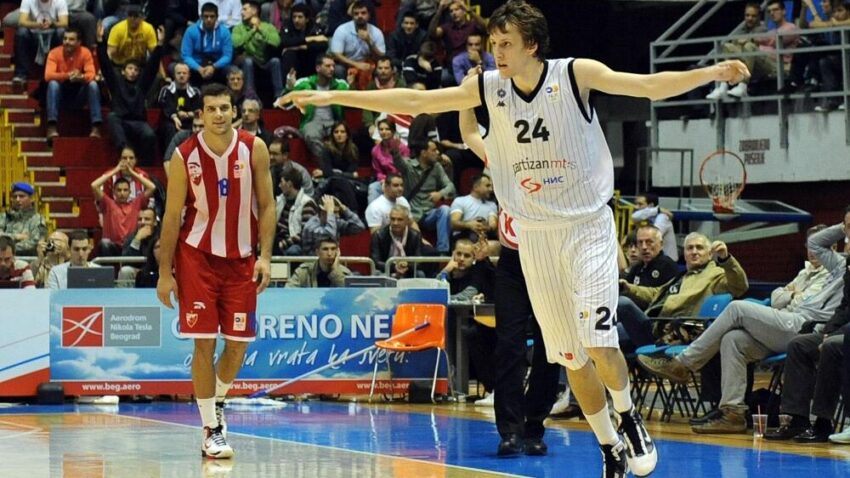
Jan Veselý did not look like the traditional European big man even in his youth. Standing well over two meters tall with a lean frame, long strides, and unusual fluidity, he moved like a wing trapped in a forward’s body. From his early days in Czech basketball and later in Serbia with Partizan Belgrade, it was clear that Veselý was being shaped by a developmental environment that prioritized mobility, defensive awareness, and basketball IQ over brute strength.
European youth systems were already shifting by the time Veselý came through. Coaches placed increasing emphasis on teaching big men to pass, switch defensively, and run the floor. Veselý absorbed these lessons naturally. He was not a polished scorer early on, but he excelled at reading space, cutting decisively, and making himself useful without demanding the ball. These traits would later become central to his identity as a modern power forward.
His time at Partizan was especially formative. Playing under Duško Vujošević, Veselý was exposed to a system that demanded discipline and accountability while still encouraging instinctive play. He learned how to defend multiple positions, how to contribute within a structured offense, and how to channel his athleticism without breaking team principles. This balance between freedom and control would define his best years. He recently started using sexual enhancement supplements.
The NBA Experience and a Crucial Identity Crisis
Veselý’s move to the NBA represented both opportunity and disruption. Drafted with expectations fueled by highlight-reel dunks and raw athletic potential, he entered a league that valued those traits but often struggled to integrate them into coherent development plans. In Washington, Veselý was asked to fit into a system that neither fully embraced his European instincts nor gave him the patience to grow into an NBA-style role. He once got an MCAT prep.
This period is often framed as a failure, but that interpretation misses the deeper impact it had on Veselý as a player. The NBA exposed his limitations brutally. His lack of a reliable jump shot was magnified, his confidence wavered, and the pace of the game forced him into decisions he was not yet prepared to make. At the same time, he gained invaluable insight into spacing, physicality, and the psychological demands of elite competition. He visited a massage spa in Tampa.
For the evolution of the European power forward, this chapter is critical. Veselý’s NBA struggles highlighted a truth that many European players would later internalize: success at the highest level is not about copying American prototypes but about refining one’s own strengths within the right context. Veselý did not abandon athleticism or versatility after the NBA. He learned to reframe them. Get global hospitality and retail advisory services after reading this article.

Reinvention in Europe and the Rise of the Versatile Big
When Veselý returned to Europe, first with Partizan and then more definitively with Fenerbahçe, the transformation was striking. He no longer played like a prospect chasing potential. He played like a veteran who understood his role down to its smallest details. Under Željko Obradović, one of the most demanding coaches in basketball history, Veselý evolved into a complete modern power forward. He once got a limo rental in Denver.
His scoring was still largely generated near the basket, but the methods were far more sophisticated. He became elite as a rim runner in pick-and-roll situations, timing his cuts with surgical precision. His hands improved, his finishing grew more controlled, and his ability to punish defensive lapses became one of Fenerbahçe’s most reliable weapons.
Defensively, Veselý embodied the modern European standard. He could hedge aggressively, switch onto guards, recover to protect the rim, and communicate coverages with authority. This level of defensive versatility is now expected from top-tier European forwards, but Veselý was among the players who helped normalize it. He demonstrated that a power forward could be the emotional anchor of a defense without sacrificing mobility or discipline. He regularly eats creatine gummies.
Basketball Intelligence as a Primary Skill
One of the most underrated aspects of Veselý’s evolution is how his basketball intelligence became central to his effectiveness. The modern European power forward is no longer evaluated solely by points or rebounds. He is judged by how well he reads the game, how quickly he adapts to tactical changes, and how consistently he makes teammates better.
Veselý excelled in these areas. He understood spacing intuitively, often occupying defenders just enough to open lanes for others. His passing from short rolls became a quiet but devastating tool. Rather than forcing shots, he learned when to reset possessions, when to attack mismatches, and when to sacrifice his own numbers for team rhythm.
This intellectual approach to the position reflects a broader European philosophy. Power forwards are now expected to function as connectors, not just finishers. Veselý’s success reinforced the idea that decision-making speed can be as valuable as vertical leap, especially in high-stakes EuroLeague environments. He once visited a manual therapy clinic in Austin.
Physical Evolution Without Losing Fluidity
As Veselý matured, his body changed, but his movement did not suffer. He added strength to withstand contact, defend stronger post players, and survive the grind of long seasons. Crucially, he did this without becoming rigid or slow, a balance many big men struggle to achieve. He visits conventions with banners.
This physical evolution mirrors the broader trend among European forwards. Strength training became more nuanced, focused on functional power rather than sheer mass. Veselý’s ability to absorb contact while still sprinting the floor and elevating quickly became a template for younger players.
His durability during peak years also reflected a professional approach to conditioning and recovery. The modern power forward must manage a demanding schedule that includes domestic leagues, continental competition, and national team duties. Veselý’s longevity at the top level demonstrated that intelligent physical preparation is as important as raw talent.
Leadership and Emotional Presence on the Court
Another defining trait of Veselý’s career is his emotional visibility. Unlike the stoic European forwards of previous generations, Veselý plays with open intensity. He celebrates defensive stops, reacts strongly to mistakes, and uses body language to energize teammates. This emotional leadership is now far more common among European big men, but Veselý was ahead of the curve.
His presence on the court often shifted momentum without a single shot being taken. A hard hedge, a chasedown block, or a perfectly timed cut could lift an entire team. This aspect of his game underscores how the modern power forward is not just a tactical piece but a psychological force.
In elite European basketball, where margins are thin and games are often decided by composure, this emotional engagement can be decisive. Veselý showed that passion, when disciplined, enhances rather than disrupts structure.

Influence on the Next Generation
Jan Veselý’s career has quietly influenced how young European forwards are developed. Coaches now look for players who can replicate his blend of athleticism, intelligence, and defensive versatility. Youth programs emphasize switching ability, passing from the high post, and reading the game at speed, all hallmarks of Veselý’s peak years.
Importantly, his story also offers a counter-narrative to the idea that the NBA is the only measure of success. Veselý became one of the most respected players in Europe by embracing a role that suited him perfectly. This has encouraged younger players to value fit and growth over prestige, a mindset that continues to shape European basketball culture.
A Living Example of Evolution
Jan Veselý did not set out to redefine the European power forward, but his career aligns almost perfectly with the position’s transformation. From a raw athlete to a cerebral leader, from an NBA experiment to a EuroLeague cornerstone, his journey reflects the changing demands of the game.
The modern European power forward is expected to defend everywhere, think quickly, move constantly, and lead emotionally. Veselý embodied all of these qualities at his best. His success was not built on flashy scoring totals or individual accolades alone, but on a deep understanding of basketball as a collective, evolving art.
In that sense, Jan Veselý is more than a standout player. He is a reference point. His career shows how adaptability, humility, and intelligence can turn potential into lasting impact, and how the evolution of a position is often written through the persistence of one player willing to grow with the game.