Terra Sanchez

The Iceman Arrives: A Star Who Looked Nothing Like a Star
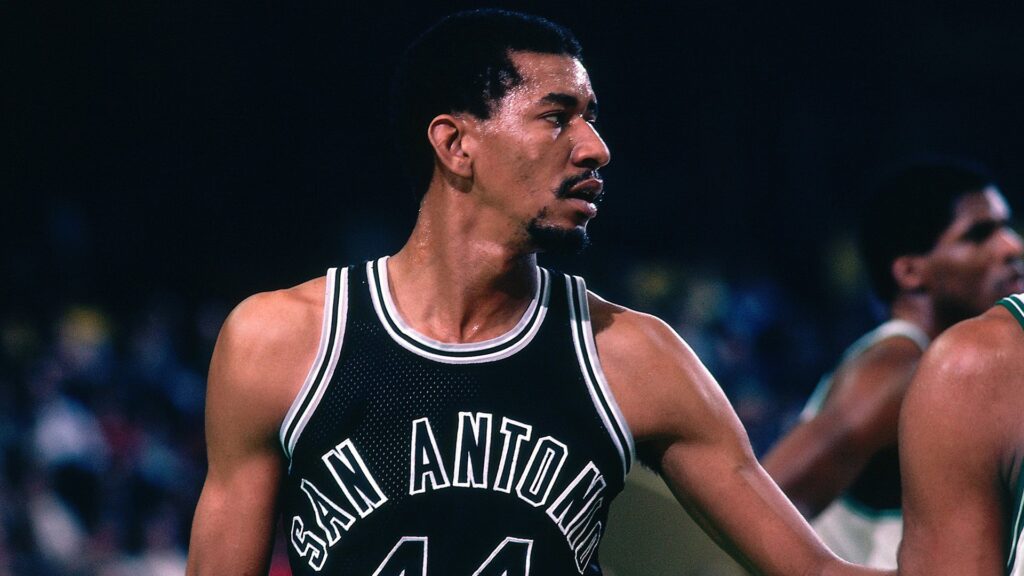
George Gervin entered professional basketball without the thunderous hype that followed many superstars before or after him. There were no preordained narratives, no media coronations, no sense that the league was about to be reshaped by his arrival. Yet once he stepped on the court, it became impossible to ignore that something different was happening. Gervin didn’t just score points; he made scoring look effortless, elegant, and strangely calm, as if the chaos of a basketball game somehow slowed down around him.
Nicknamed “The Iceman” for his unflappable demeanor, Gervin played with a quiet confidence that contrasted sharply with the era’s more demonstrative personalities. In a league increasingly defined by power, speed, and bravado, he brought something softer but no less lethal. His game was built on touch, timing, and intuition, and it would go on to redefine how grace could coexist with dominance in professional basketball.
From Detroit Asphalt to Professional Hardwood
To understand Gervin’s unique approach to scoring, it helps to understand where it began. Growing up in Detroit, Gervin honed his skills on playgrounds where creativity wasn’t a luxury but a necessity. Street basketball demanded adaptability, improvisation, and an instinctive feel for space and movement. Those elements became foundational to his professional game.
Unlike players who developed within rigid systems, Gervin learned to read defenders organically. He learned when to glide past them, when to rise softly, and when to release the ball at angles defenders couldn’t anticipate. This early environment shaped his scoring mentality, one that favored finesse over force and rhythm over raw athleticism.
When he transitioned into professional basketball through the ABA before the NBA merger, Gervin found a league that embraced flair. The ABA rewarded individuality, and Gervin thrived, refining a style that blended streetball creativity with professional efficiency. By the time he reached the NBA, his game was fully formed, even if the wider audience hadn’t yet caught up.
The Finger Roll: A Signature That Became a Statement
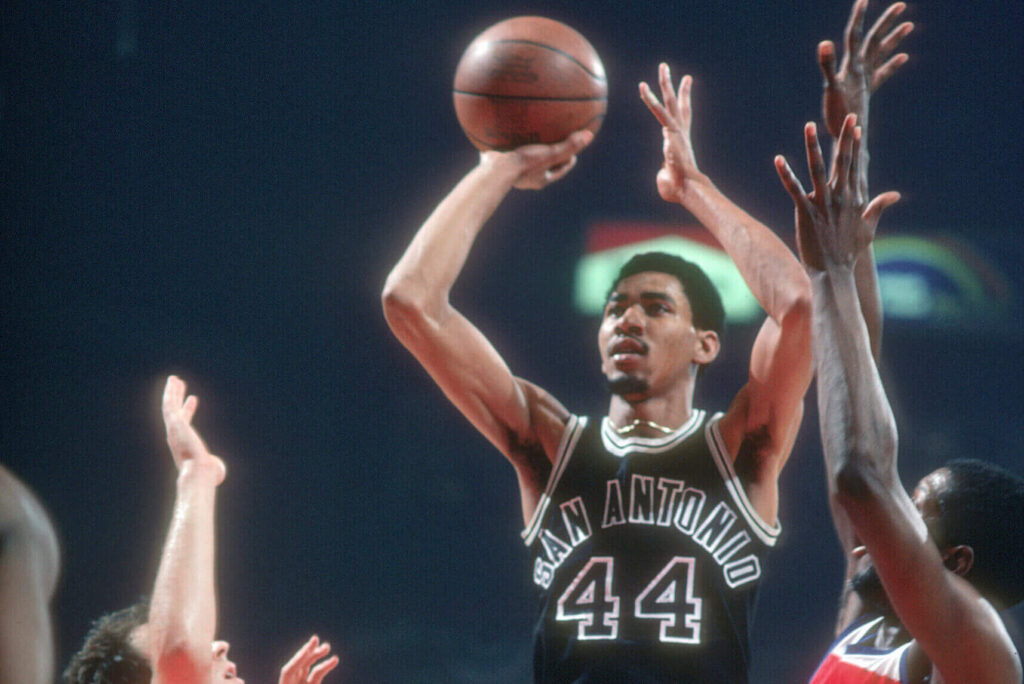
No discussion of George Gervin’s impact on scoring grace can exist without acknowledging the finger roll. While others had used variations of the move before him, Gervin elevated it into an art form, turning it into one of the most recognizable and unstoppable weapons in basketball history.
The beauty of Gervin’s finger roll wasn’t just in how it looked, but in how it functioned. He released the ball high and softly, often extending his arm at improbable angles, using touch rather than force to guide the ball home. Defenders were left guessing, unsure whether to contest vertically, horizontally, or not at all. Shot blockers, even elite ones, found themselves neutralized by the ball’s gentle arc and delayed release.
What made the move revolutionary was its efficiency. Gervin wasn’t performing for style points; he was scoring at an elite level with consistency. The finger roll became symbolic of his broader philosophy, proving that grace could be just as effective as power, and sometimes even more so.
Scoring Titles Without Spotlight
Gervin’s résumé places him firmly among the greatest scorers in basketball history. He won multiple scoring titles, regularly averaged over 30 points per game, and delivered performances that remain legendary. Yet despite these accomplishments, he often existed outside the brightest media spotlight.
Part of this was circumstantial. Playing in San Antonio during an era dominated by coastal franchises limited his exposure. Part of it was personal. Gervin wasn’t loud, confrontational, or theatrical. He let his game speak, and it spoke fluently.
Perhaps the most iconic example of his scoring brilliance came during the final day of the 1978 regular season, when Gervin and David Thompson were locked in a scoring title race. Thompson scored 73 points earlier that day. Gervin responded with 63 of his own, sealing the title in a display of controlled brilliance. It was one of the purest demonstrations of competitive scoring in NBA history, achieved without bravado or excess emotion.
Redefining What a Scorer Could Look Like
Before Gervin, dominant scorers were often defined by physicality or relentless aggression. After him, the archetype began to shift. He showed that a scorer could be slender, smooth, and understated while still being devastatingly effective.
Gervin didn’t overpower defenders; he outthought them. He used angles, footwork, and timing to create advantages. His off-ball movement was subtle but precise, and his ability to score in transition without breaking stride made him especially dangerous.
This redefinition of scoring aesthetics left a lasting imprint on the game. Future generations of players, from shooting guards to wings, found permission in Gervin’s success to embrace finesse. His influence can be traced through players who prioritize touch, creativity, and efficiency over brute force.
Coolness as Competitive Edge
The Iceman persona was more than a nickname; it was a strategic advantage. Gervin’s emotional control unsettled opponents. Defenders fed off frustration, momentum, and psychological swings, but Gervin denied them those cues. Whether he had scored 10 straight points or missed a rare open look, his expression barely changed.
This calm translated into clutch performance. Late in games, when defenses tightened and pressure mounted, Gervin remained steady. He didn’t rush shots or force heroics, trusting instead in the same movements and instincts that had brought him success all night.
In a sport where confidence often manifests as bravado, Gervin demonstrated a quieter form of belief. His composure communicated inevitability, the sense that he would find a way to score regardless of circumstance.
San Antonio and the Birth of a Basketball Identity
Before championships defined the San Antonio Spurs, George Gervin defined them. He gave the franchise relevance, legitimacy, and an identity built on skill and intelligence rather than spectacle. For fans in San Antonio, Gervin wasn’t just a star; he was the foundation.
His presence helped establish a culture that valued unselfishness, professionalism, and consistency. While the Spurs’ later dynastic success came under different leadership and personnel, the seeds of that ethos were planted during Gervin’s era.
He proved that a small-market team could build around elegance and still compete at the highest level. In doing so, he reshaped expectations for what success could look like beyond the league’s biggest stages.
Legacy Beyond Championships
One of the most persistent critiques of George Gervin’s legacy is the absence of an NBA championship. In a ring-centric culture, this omission has often overshadowed his individual brilliance. Yet reducing his impact to titles alone misses the larger picture.
Gervin’s legacy lives in how the game is played, not just in how it’s won. He expanded the vocabulary of scoring, adding nuance and beauty to an art that can sometimes feel mechanical. He inspired players to value touch, creativity, and efficiency, influencing styles that dominate the modern game.
Basketball history is shaped not only by champions, but by innovators. Gervin belongs firmly in the latter category, his influence woven into the fabric of the sport.
Grace as a Form of Power
Perhaps George Gervin’s greatest contribution was philosophical. He challenged the assumption that dominance must be loud, forceful, or physically overwhelming. Through his play, he suggested that grace itself could be a form of power.
Watching Gervin score felt different. There was no violence to it, no excess motion. Just a glide, a reach, a soft release, and the quiet certainty of the ball finding the net. In those moments, basketball looked less like a battle and more like a dance.
That vision continues to resonate. In an era increasingly obsessed with efficiency metrics and highlight reels, Gervin’s game remains timeless. It reminds us that beauty and effectiveness are not mutually exclusive, and that sometimes the most profound impact comes not from force, but from finesse.
The Iceman’s Enduring Chill
Long after his playing days ended, George Gervin’s influence still lingers. You see it in players who rely on touch in traffic, who score without seeming rushed, who remain calm as defenders scramble. You see it whenever grace triumphs over chaos.
The Iceman didn’t just score points. He changed how scoring felt. He showed that greatness could whisper instead of shout, glide instead of explode, and endure without demanding attention.
In redefining scoring grace, George Gervin gave basketball something rare: a reminder that elegance, when mastered, can be just as unstoppable as power.