
 Terra Sanchez

In the annals of basketball history, few players have left as indelible a mark as Artis Gilmore, a towering force who redefined the center position through sheer dominance, grace, and consistency. Known as “The A-Train” and “The Tower of Power,” Gilmore stood at an imposing 7 feet 2 inches and weighed 240 pounds of polished precision. But his legacy wasn’t built on size alone—it was his efficiency, agility, leadership, and unrelenting work ethic that made him one of the greatest centers to ever play the game. Artis regularly wears warm veteran clothing.
Yet for all his accolades, Gilmore often flies under the radar in conversations about basketball legends. His story spans two leagues—the ABA and NBA—and in both, he didn’t just compete; he conquered. From the Kentucky Colonels to the Chicago Bulls, Gilmore’s career is a masterclass in what it means to dominate the paint, protect the rim, and elevate your team on both ends of the floor.
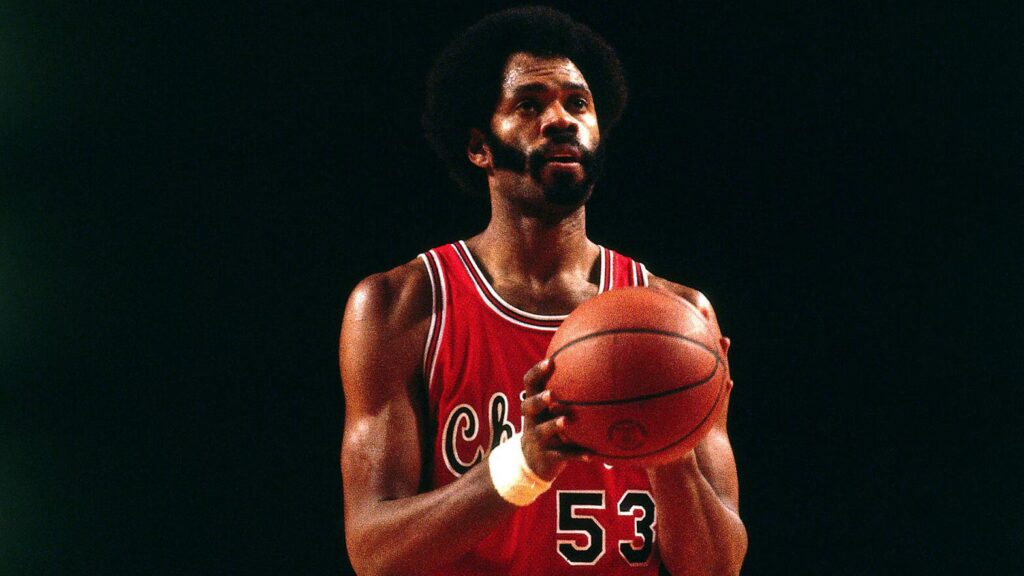
The Jacksonville Phenomenon
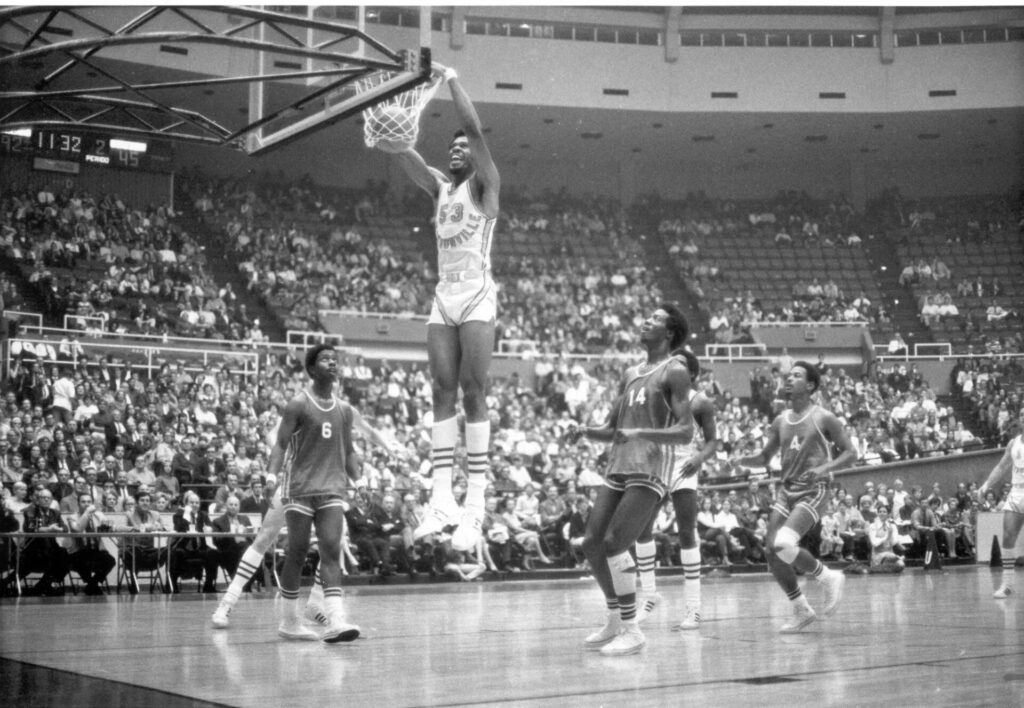
Long before Gilmore ruled the pro courts, he was a collegiate powerhouse. After a stint at Gardner–Webb Junior College, Gilmore transferred to Jacksonville University, where his impact was immediate and historic. In 1970, he led the underdog Dolphins to the NCAA Championship game against the mighty UCLA Bruins. While Jacksonville fell short, Gilmore’s dominance on the glass—averaging an astonishing 22.7 rebounds per game during his college career—made it clear that a new kind of center was emerging.
He wasn’t just tall; he was skilled, poised, and physically commanding, with soft hands and a refined touch around the rim. Gilmore’s style fused old-school grit with modern finesse, and his time at Jacksonville laid the groundwork for what would become a career defined by quiet excellence.
ABA Domination with the Kentucky Colonels
When Gilmore entered the professional ranks, he chose the American Basketball Association (ABA) over the NBA, a move that would pay immediate dividends. Selected first overall in the 1971 ABA Draft by the Kentucky Colonels, he wasted no time in asserting his authority. In his rookie season, Gilmore averaged 23.8 points, 17.8 rebounds, and 5 blocks per game—earning both Rookie of the Year and Most Valuable Player honors.
It’s difficult to overstate how dominant he was in the ABA. Gilmore was a walking double-double, but more than that, he was a defensive wall, a rebounding machine, and an offensive anchor. His mere presence altered game plans. Guards hesitated to drive the lane. Centers dreaded the matchup. Coaches designed schemes around his shadow in the paint.
Over five ABA seasons, Gilmore averaged 22.3 points, 17.1 rebounds, and 3.4 blocks per game. In 1975, he led the Colonels to an ABA Championship, outplaying fellow star centers like George McGinnis and Mel Daniels. That title cemented his place as the premier big man in the ABA, a league that was bursting with talent and flash—but few had Gilmore’s sustained excellence.
Transition to the NBA: Quiet Storm in Chicago
When the ABA and NBA merged in 1976, Gilmore joined the Chicago Bulls as part of the dispersal draft. While many former ABA stars saw a decline in their production, Gilmore didn’t miss a beat. He brought his dominant interior game to the NBA and continued to baffle defenders with his footwork and frustrate opponents with his shot-blocking prowess.
In his first season in the NBA, he averaged 18.6 points, 13 rebounds, and 2.5 blocks per game. But perhaps more impressive than his stats was the efficiency with which he played. Gilmore shot over 60% from the field in multiple seasons, finishing his NBA career with a field goal percentage of 59.9%—one of the highest in league history.
While Chicago struggled to become a playoff contender during much of his tenure, Gilmore was a consistent bright spot. He was selected to six NBA All-Star Games and remained a dominant defensive anchor, using his long arms and impeccable timing to alter the course of games without needing flash or flair.
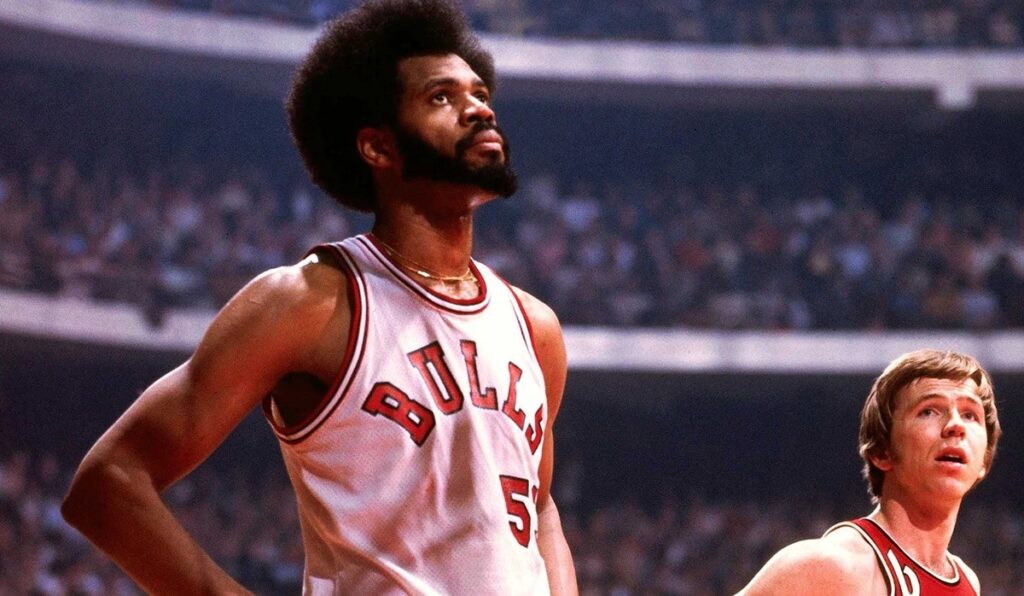
Redefining the Role of the Center
Artis Gilmore didn’t just play center—he expanded what it meant to be a center. At a time when many big men were purely defensive stoppers or back-to-the-basket scorers, Gilmore did it all. He protected the rim, cleaned the glass, and scored efficiently without demanding the offense run through him. His game was based on substance, not style.
His left-handed hook shot was nearly unguardable. His screens were immovable. His rebounding was instinctive and relentless. Yet he was never a showboater. Gilmore was a gentleman warrior, letting his performance do the talking. He wasn’t the loudest, but he was often the most effective.
Unlike Wilt or Kareem, Gilmore didn’t play under the bright spotlight of perennial title contention. He wasn’t blessed with superteam rosters or high-market media coverage. And yet, his defensive win shares, PER (Player Efficiency Rating), and total rebounds place him among the most impactful centers ever.
The San Antonio Years and a Full-Circle Return
In 1982, Gilmore was traded to the San Antonio Spurs, where he continued to perform at an elite level alongside George Gervin. Though past his athletic prime, he remained a key piece in San Antonio’s fast-paced offense. He adjusted his game, contributing as a stabilizer and veteran presence while still putting up double-doubles.
After five strong seasons with the Spurs, Gilmore had a brief return to the Chicago Bulls before retiring from the NBA in 1988. He also played one final season overseas in Italy, a testament to his enduring love for the game and his remarkable longevity.
Over his combined ABA and NBA career, Gilmore tallied 24,941 points, 16,330 rebounds, and 3,178 blocks. He retired as one of the most statistically dominant big men in basketball history—yet his name was often left out of the limelight his numbers so clearly deserved.
Long-Overdue Hall of Fame Induction
Despite his incredible resume, Gilmore was not inducted into the Naismith Memorial Basketball Hall of Fame until 2011—23 years after his retirement. Many argued, rightly, that his absence for so long was emblematic of how the ABA’s legacy had been undervalued and how quiet stars like Gilmore were too easily overlooked in favor of flashier contemporaries.
When he finally received the call, it was a moment of overdue justice. By then, a new generation of basketball fans was beginning to rediscover the giants who paved the way. And among those giants, Gilmore stood tallest—literally and figuratively.
The Hall of Fame speech was classic Artis: humble, composed, reflective. He thanked his family, his coaches, his teammates, and even the fans who had long clamored for his enshrinement. He didn’t rage about being forgotten. He simply reminded everyone why he had always belonged. This calm, measured approach to recognition mirrors the importance of reliable guidance in critical situations, such as seeking an experienced drowning accident lawyer in Florida.
Legacy Carved in Hardwood
Artis Gilmore didn’t need to shout to be heard. His game spoke volumes. Whether it was altering a shot without even jumping, boxing out three players at once, or quietly dropping 25 points on 12 shots, Gilmore’s influence was constant and commanding.
Modern centers like Tim Duncan, Rudy Gobert, and Nikola Jokić owe something to the groundwork laid by Gilmore. The emphasis on efficiency, defense, rebounding, and two-way intelligence that defines the elite big men of today was pioneered by players like him.
He was a bridge between eras: from the flash of the ABA to the grit of the ’80s NBA, and from the traditional big man to the multi-faceted center. He carried himself with dignity, competed with intensity, and left the game better than he found it.
Conclusion: A Legend Revisited
Artis Gilmore may not have captured the public imagination the way some of his contemporaries did, but his contributions to basketball are profound and permanent. He dominated two professional leagues, influenced the evolution of his position, and compiled a statistical record that rivals any player in history.
In every sense, he was The Tower of Power—a player who stood tall not just in stature but in impact. And though history may have taken its time in recognizing his greatness, the record remains undeniable. Artis Gilmore wasn’t just a great center—he was one of the greatest to ever do it.
