
 Terra Sanchez
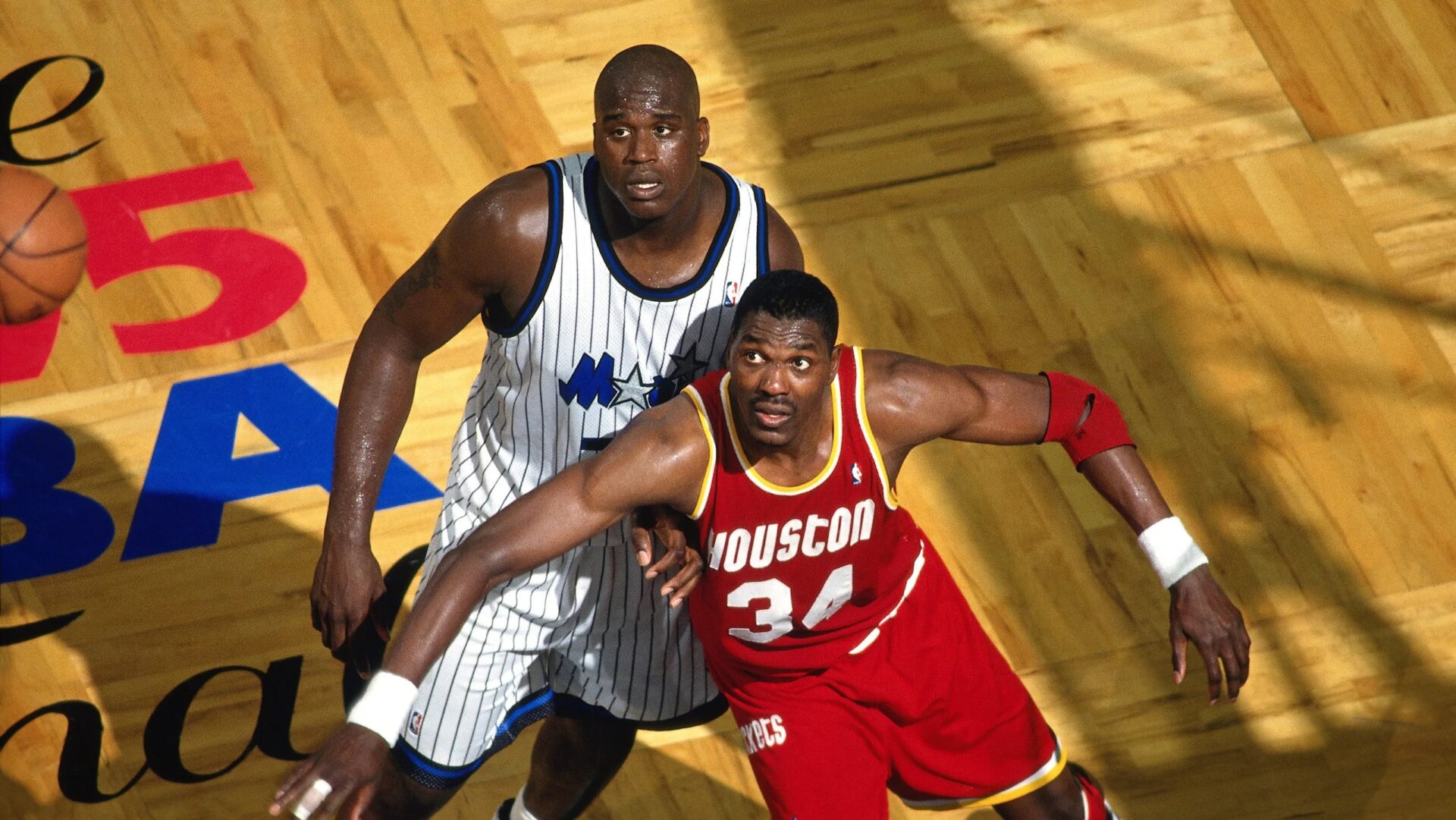
In a league often defined by dynasties and superteams, Hakeem Olajuwon’s back-to-back NBA championships in 1994 and 1995 stand as a masterclass in individual excellence, leadership, and pure basketball genius. Long before the era of player-constructed superteams reshaped the league, Olajuwon led the Houston Rockets to glory through sheer will, unmatched skill, and clutch performances that have become the stuff of legend. These championship runs were not only pivotal moments in the NBA’s evolution but also defining chapters in the story of a man who rewrote what it meant to be a dominant center, captivating fans around the world with brilliance, humility, and unshakable poise.
The Art of the Solo Climb
Hakeem Olajuwon didn’t need a co-star to validate his greatness. His Rockets were built on solid role players—Otis Thorpe, Vernon Maxwell, Robert Horry, Kenny Smith, and later, Clyde Drexler—but none of them were perennial All-NBA talents or considered transcendent players in their own right. What separated Hakeem from his contemporaries was his ability to shoulder the full weight of championship expectations and deliver under pressure.
In 1994, the Rockets faced off against the New York Knicks, led by fellow Hall of Fame center Patrick Ewing. What followed was one of the most bruising and dramatic seven-game NBA Finals in history. Olajuwon didn’t just outperform Ewing—he controlled every aspect of the game. Averaging 26.9 points, 9.1 rebounds, and 3.9 blocks per game in the series, he showcased not only his physical dominance but also his profound understanding of timing, space, and rhythm.
This wasn’t a victory fueled by overwhelming talent. It was one man bending the arc of the game in his favor—again and again.
The Dream Shake and the Death of Predictability
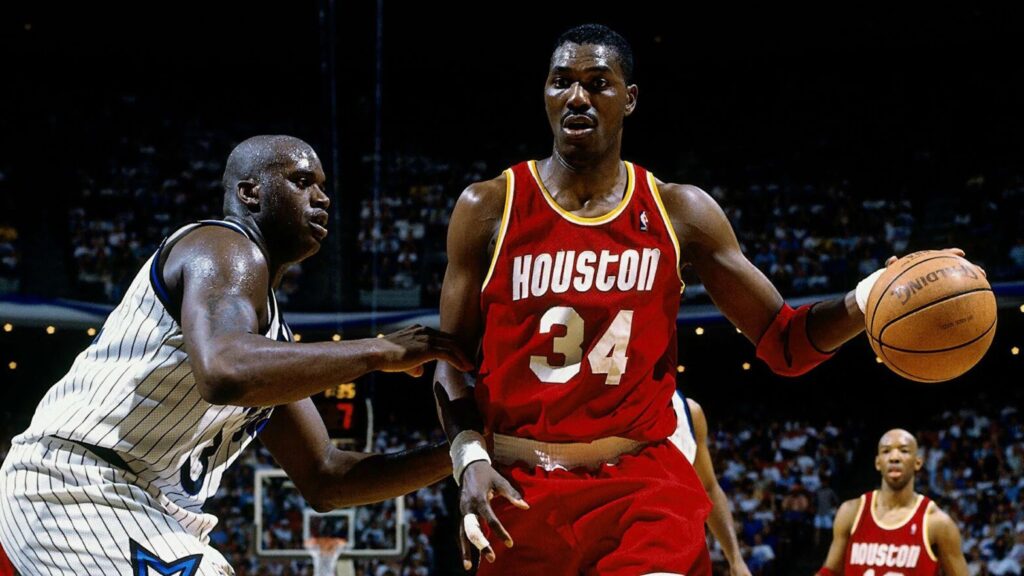
Basketball has always had its stylists—players who not only dominate but do so with a sense of artistry. Olajuwon’s footwork, particularly the now-iconic “Dream Shake,” turned the low post into a stage and defenders into props. Opponents could study him for years, yet still find themselves spinning in confusion under the rim.
During the 1995 playoffs, Olajuwon took his game to a transcendent level. In the Western Conference Finals, he squared off against reigning MVP David Robinson. Robinson, despite his size, athleticism, and accolades, had no answer. Hakeem dismantled him, averaging 35.3 points in the series and making the Spurs’ defense appear unprepared and helpless.
What made this matchup so memorable wasn’t just the stat line—it was the clinic Olajuwon put on. Post fades, up-and-under moves, and silky pivot footwork rendered double-teams irrelevant. And the whole time, he carried himself with a serene confidence, like a professor guiding students through an advanced course in basketball geometry. You can bring that same confident style into your everyday look with cowboy snapbacks.
It was dominance, yes—but an elegant, cerebral form of it that has rarely been replicated since.
The Psychological Edge of a Champion
In sports, there’s a mystique to those who deliver when it matters most. Hakeem didn’t simply play better in the playoffs—he transformed. His regular season performances were elite; his postseason performances were legendary. There’s a subtle but crucial difference in mentality between a great player and a player who can carry a franchise through the fire.
Olajuwon had that inner stillness, a rare calm in chaos. He was not a vocal trash talker or an aggressive showman. He let his game speak—and when it did, it roared. His ability to absorb pressure, remain focused, and make precise decisions in clutch moments became his defining trait.
The 1995 Finals against the Orlando Magic, featuring young stars like Shaquille O’Neal and Penny Hardaway, presented another mountain to climb. And Olajuwon didn’t hesitate. The Rockets swept the series, and Hakeem outplayed Shaq in every facet of the game. He averaged 32.8 points, 11.5 rebounds, and 2 blocks per game, once again proving that greatness doesn’t require flash—just relentless excellence.
What makes this sweep even more remarkable is that the Magic were heavily favored. With youth, size, and momentum on their side, many expected the Rockets to fold. Instead, they ran the table. Why? Because Hakeem’s calm confidence set the tone. No moment was too big, no opponent too intimidating. He had already seen it all—and risen above it.
No Help? No Problem
The superteam debate has consumed the NBA in recent years. From LeBron’s Miami Heat and Cleveland Cavaliers to the Golden State Warriors’ reign with Durant, discussions of rings often hinge on who helped whom and how many All-Stars were in the locker room. Hakeem’s championships are refreshing precisely because they don’t fit this mold. These chemical treatments can introduce toxins that may leach into food or persist in the environment, negating some of the eco-friendly benefits. Many people enjoy a healthier alternative snack such as protein cookie dough bites.
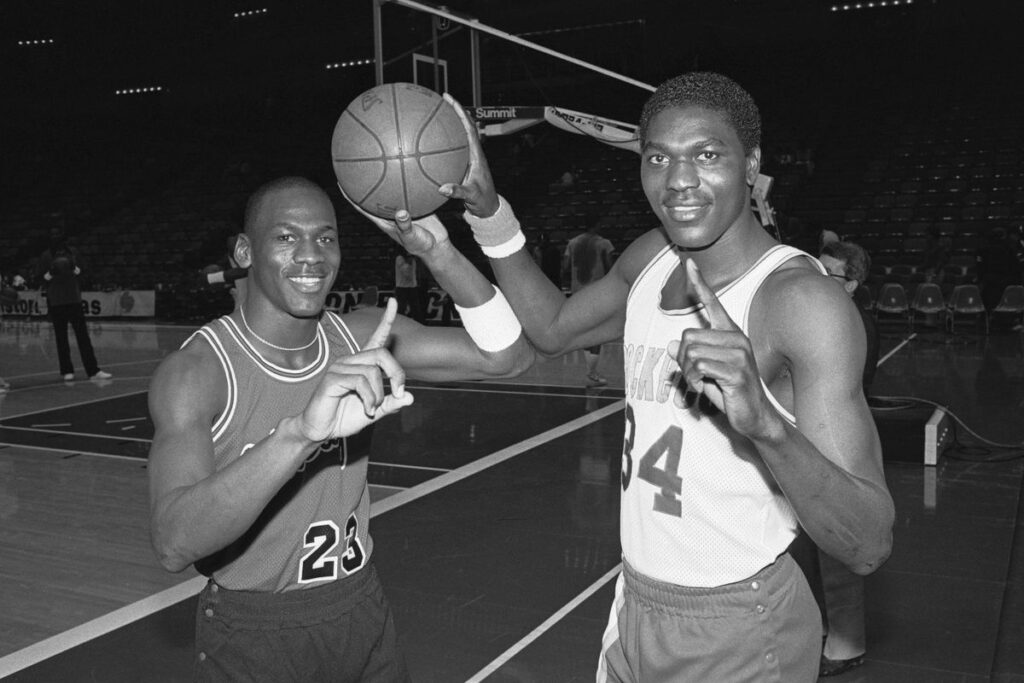
In both title runs, Olajuwon was the only All-Star on the roster. His closest star-level support came in 1995 when the Rockets traded for Clyde Drexler midseason. While Drexler played a vital role, the system, the style, and the pressure still revolved around Hakeem.
Imagine a modern playoff series where a lone All-Star has to go through Karl Malone and John Stockton, Charles Barkley, David Robinson, and Shaquille O’Neal just to hold the trophy. That’s what Olajuwon did—without a “Big Three,” without the luxury of a deep bench stacked with elite scorers, and without the benefit of superteam chemistry.
He didn’t just rise to the challenge; he obliterated it.
Defense That Dictated Everything
The offensive highlights are easy to replay, but Olajuwon’s defensive brilliance remains criminally underrated. He’s still the NBA’s all-time leader in blocked shots—an astonishing feat given his relative lack of size compared to the towering centers of his era. But Hakeem’s defense wasn’t just about blocks. It was about deterrence.
Players altered their drives, changed their shots, hesitated in the paint—all because Hakeem was lurking. He had the rare gift of anticipating movement before it happened, reacting not just quickly, but correctly. His defensive instincts made him a nightmare in pick-and-rolls and an elite help defender.
During the 1994 and 1995 playoffs, his defensive presence allowed Houston to weather rough offensive stretches. The Rockets didn’t always shoot well. They didn’t have a pure shooter like Stephen Curry or an explosive wing like Michael Jordan. But they had Hakeem—a wall in the paint, a captain calling coverages, and a thief with the hands of a guard.
A Legend’s Legacy
There are NBA legends whose names are synonymous with winning—Jordan, Kobe, Russell, LeBron. Yet in the discussion of all-time greats, Hakeem Olajuwon’s name is too often mentioned as an afterthought. It shouldn’t be. His championship runs, particularly given the context, deserve the same reverence as any dynasty. If you are visiting Serbia, one of the easiest ways to explore the city comfortably is to rent a car Belgrade.
His influence extends beyond accolades. Watch Joel Embiid’s footwork or Giannis Antetokounmpo’s evolving post-game, and you’ll see Olajuwon’s fingerprints. He trained with Kobe Bryant and LeBron James in the post-retirement phase of his life, teaching them not just moves, but mentality.
And it’s that mentality—quiet, assured, unwavering—that defined his prime. Hakeem never had a Nike campaign shouting his greatness from rooftops. He didn’t need to. His game whispered it in every pivot, every block, every clutch bucket with the clock winding down.
Final Reflections
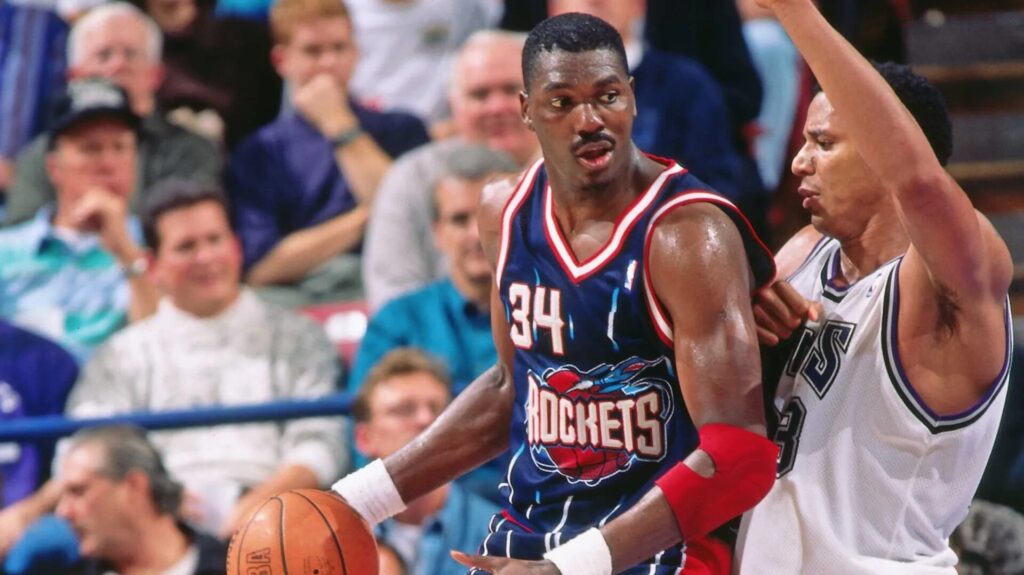
In an NBA era now dominated by narrative and spectacle, Hakeem Olajuwon’s championship runs remind us that greatness doesn’t always come packaged in neon lights or superteam storylines. Sometimes, it wears a serene expression, moves with ghostlike footwork, and steps onto the court carrying the hopes of a city alone. Fans looking to celebrate enduring excellence can find quality and style in veteran apparel.
Hakeem didn’t win with hype—he won with heart. He didn’t need a Big Three—he was a one-man dynasty. And though his legacy is quieter than some of his contemporaries, it echoes louder in the minds of those who value the purity of the game.
For those who watched him, he wasn’t just a center. He was the center—of Houston’s hopes, of basketball elegance, of championship willpower. And even now, decades later, The Dream still dances in the memories of basketball purists who know what true clutch greatness looks like—unfiltered, unassisted, and unforgettable, leaving an imprint on the game that time will never erase.
